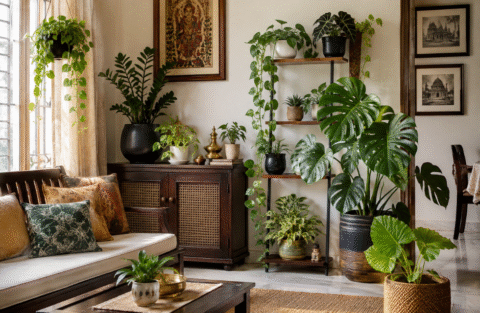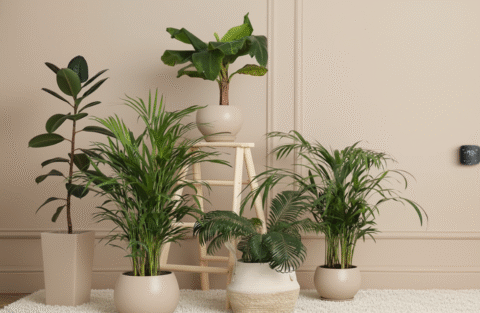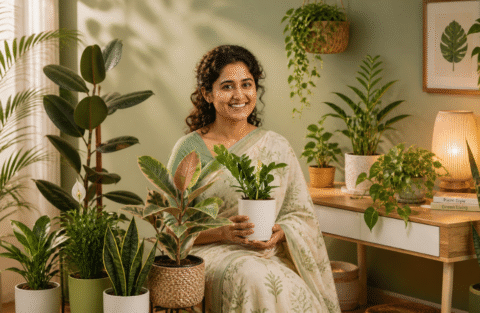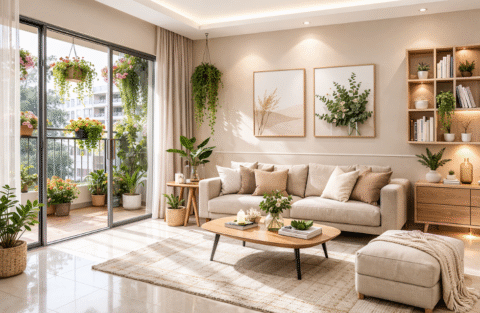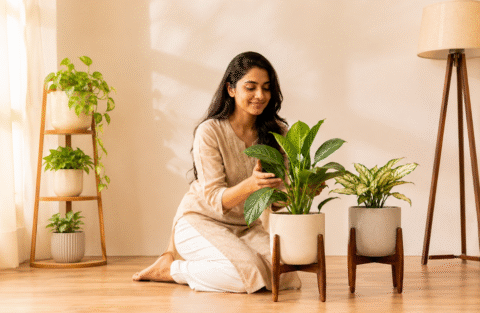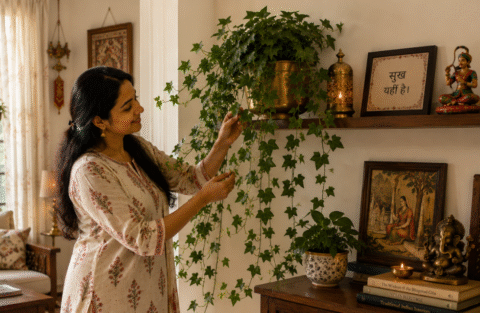


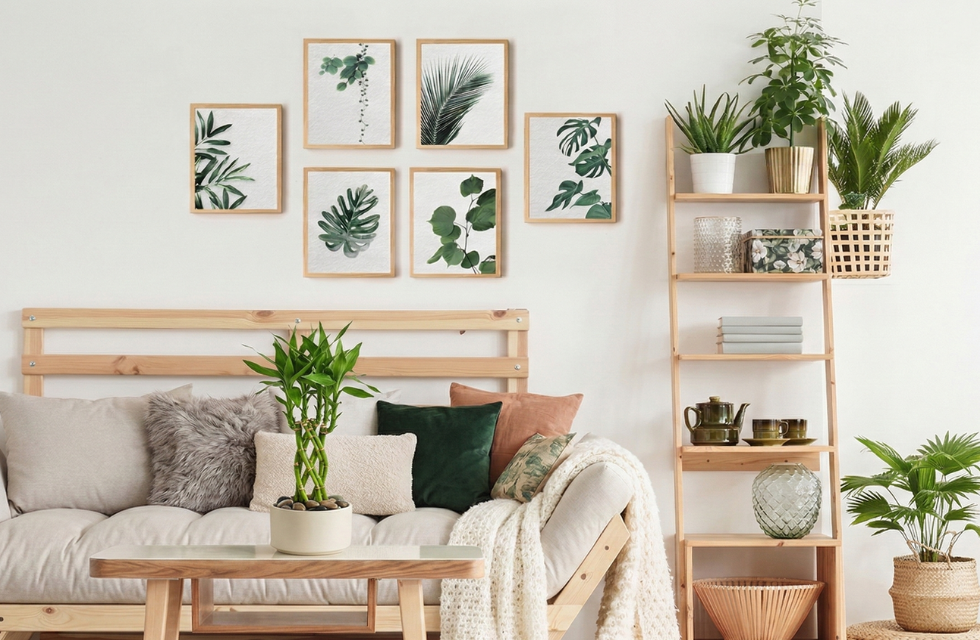
Have you ever walked into a room and instantly felt uneasy — without any obvious reason? Or stepped into a garden and felt an immediate sense of calm wash over you? That feeling isn’t just your imagination. The energy within a space has a profound effect on how we think, feel, and function every single day.
In today’s world, most of us spend nearly 90% of our time indoors. Our homes and workplaces are filled with invisible stressors — electromagnetic radiation from devices, stale air, clutter, and the emotional residue of daily tensions. Over time, this buildup of negative energy can silently affect our mood, sleep quality, productivity, and even our physical health.
This is where nature steps in — quietly, beautifully, and powerfully.

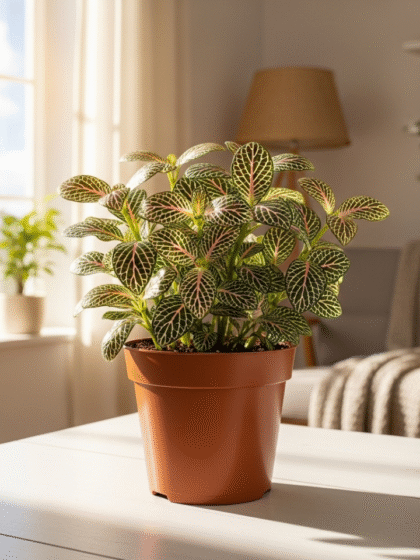
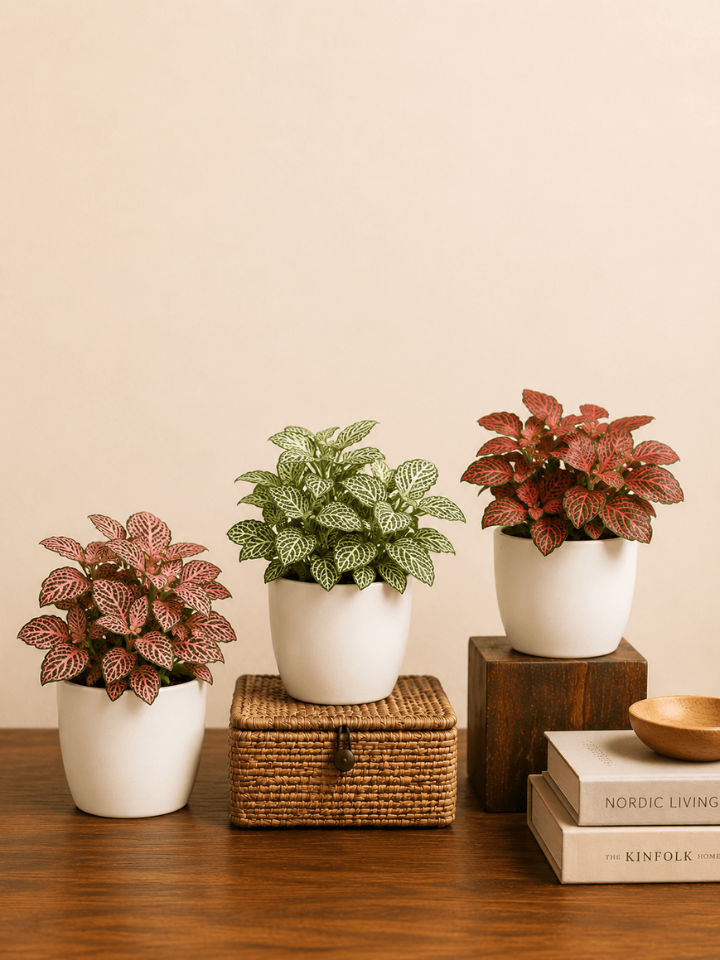
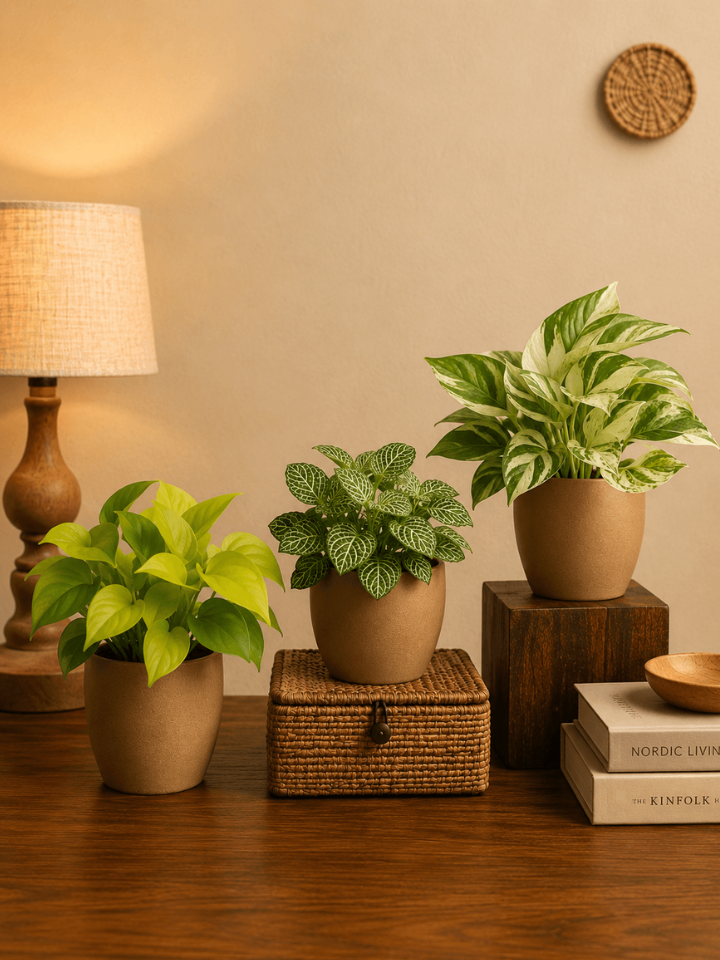
Fittonia
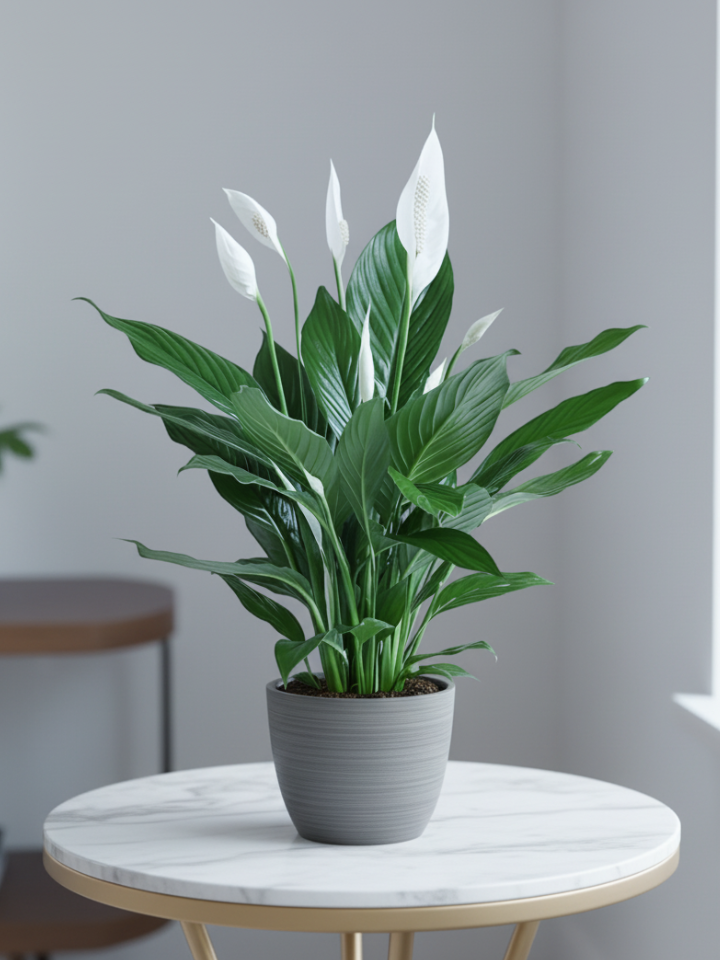
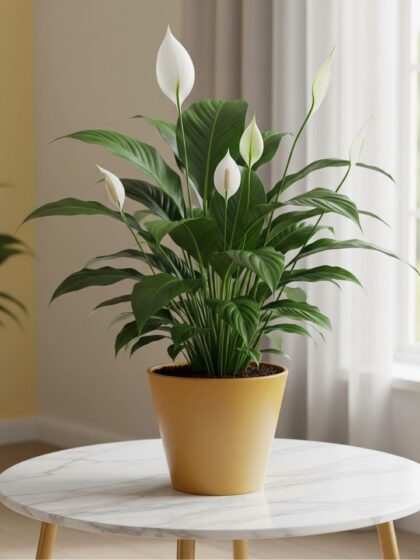
Peace Lily Plant

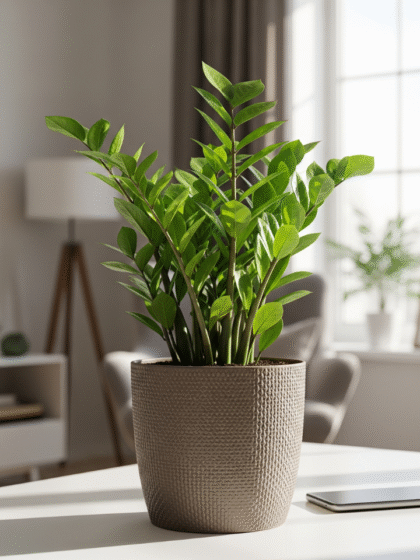
Black ZZ

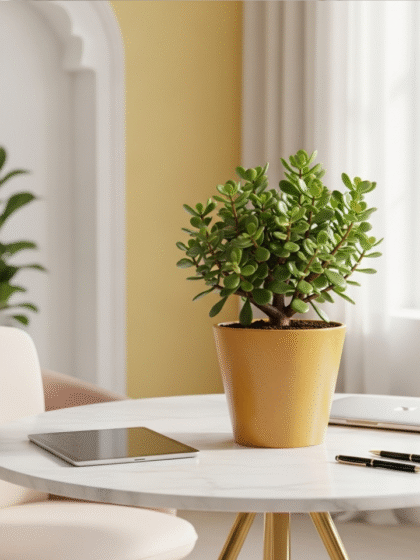
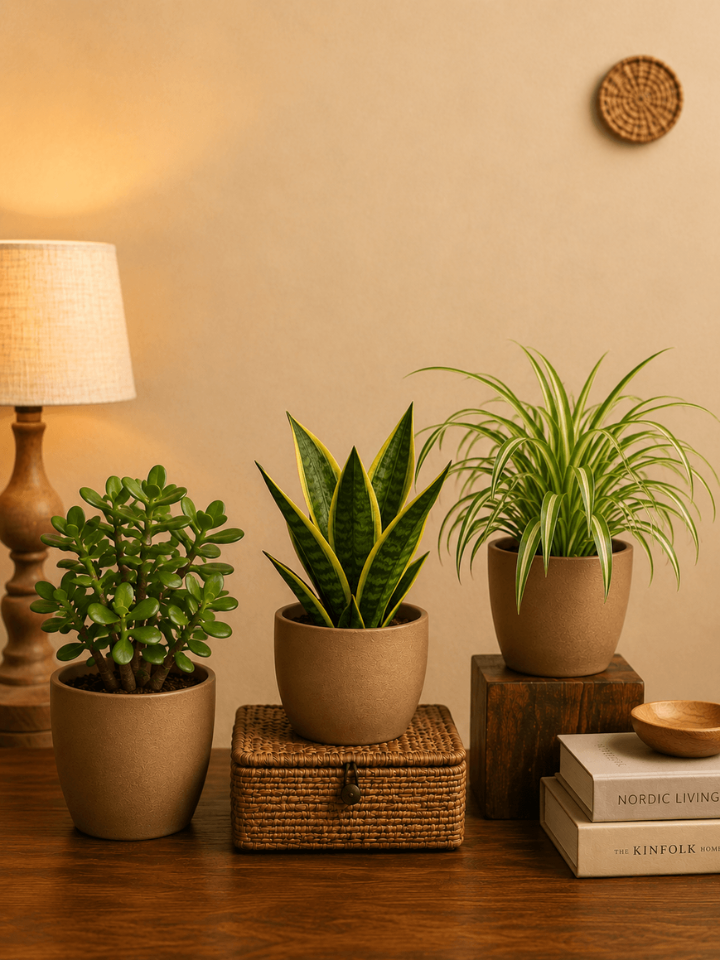
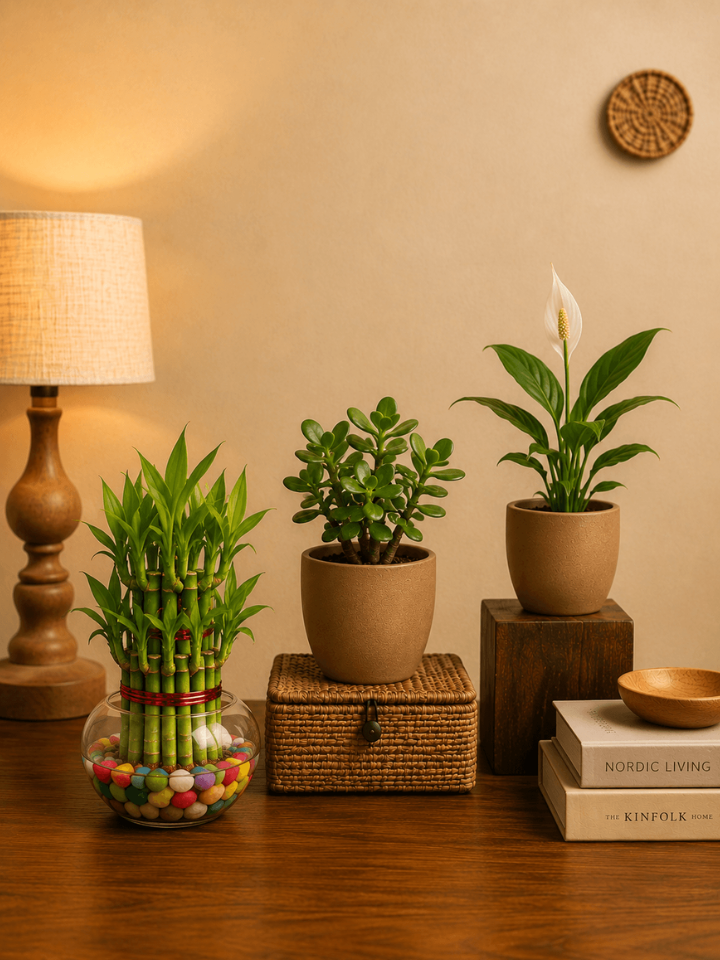
Lucky Jade Plant (Elephant Bush)


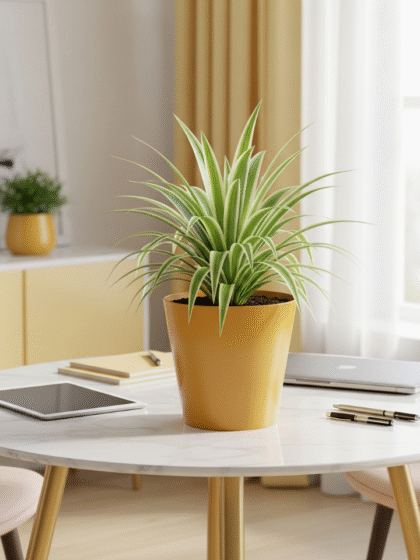
Spider plant


Snake Plant (Golden Hahnii)
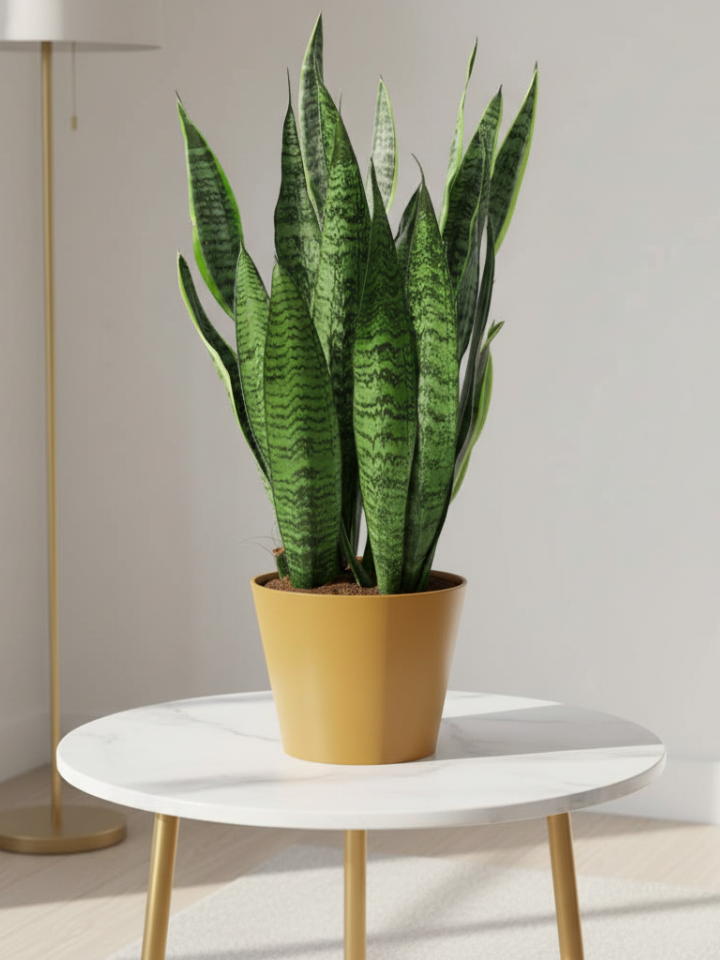

Snake Plant (Green)
The Ancient Wisdom We Are Rediscovering
For thousands of years, civilizations across the world have understood that plants are far more than decorative objects. Ancient Indian Vastu Shastra, Chinese Feng Shui, and even Greek natural philosophy all recognized that certain plants carry the ability to cleanse, calm, and energize a living space.
Tulsi was planted at the entrance of Indian homes not merely for religious reasons, but because our ancestors understood its purifying properties. Bamboo was placed near doorways in East Asian cultures to invite positive chi — the life force energy — into the home. These weren’t superstitions. They were deeply observed, generation-tested practices rooted in an intimate relationship with the natural world.
Today, modern science is beginning to validate what ancient wisdom always knew.
What Exactly Is "Negative Energy"?
The term negative energy might sound mystical, but it has very real, everyday manifestations:
- Persistent feelings of stress, anxiety, or fatigue at home
- Frequent arguments or emotional tension among family members
- Difficulty sleeping or concentrating indoors
- A general sense of heaviness or discomfort in certain rooms
- Poor air quality causing headaches or breathlessness
Negative energy can stem from poor ventilation, lack of natural light, emotional stress absorbed into a space over time, or simply an imbalance in the environment. Whatever its source, the effects are very real — and so are the natural remedies.
Why Plants Are Nature's Most Elegant Solution
Plants are living, breathing organisms that interact with their environment in remarkable ways. Through photosynthesis, they absorb carbon dioxide and release fresh oxygen. Through a process called phytoremediation, certain plants actively pull toxins and pollutants out of the air. And through their very presence — their color, texture, and quiet vitality — they trigger measurable psychological responses in the human brain.
A landmark NASA Clean Air Study found that several common houseplants can remove significant amounts of harmful compounds like benzene, formaldehyde, and trichloroethylene from indoor air. Beyond air purification, studies in environmental psychology consistently show that being around greenery reduces cortisol levels, lowers blood pressure, and improves overall emotional well-being.
In simple terms — plants make us feel better, breathe better, and live better.
A Small Green Change with a Big Impact
You don’t need a sprawling garden or a perfectly designed interior to experience the benefits. Even a single well-chosen plant placed thoughtfully in your living space can shift the energy of an entire room.
Whether you believe in the spiritual dimension of plant energy, the scientific explanation of air purification, or simply the psychological comfort of surrounding yourself with nature — the result is largely the same: a calmer, cleaner, more harmonious home.
In the sections ahead, we’ll explore exactly which indoor plants are most powerful at absorbing negative energy, where to place them for maximum effect, and how to care for them so they can continue doing their quiet, remarkable work.
The Science & Spirituality Behind Plants and Energy
There is a beautiful intersection where ancient spiritual wisdom and modern scientific research meet — and it is precisely at this crossroads that we begin to truly understand why certain plants have been revered across cultures for their energy-cleansing properties. This section explores both dimensions, because understanding the why makes the what far more meaningful.
The Science: How Plants Physically Transform Your Indoor Environment
Air Purification — More Than Just Oxygen
Most people know that plants produce oxygen. But the deeper story is far more impressive.
Indoor air is often significantly more polluted than outdoor air. Paints, synthetic furniture, cleaning products, and electronic devices constantly release volatile organic compounds (VOCs) — invisible chemical toxins that accumulate in enclosed spaces. Long-term exposure to these compounds has been linked to headaches, fatigue, respiratory issues, and even mood disorders.
Certain houseplants act as natural biofilters. Their leaves absorb airborne toxins, while microorganisms in their root zone break down harmful compounds into harmless byproducts. This process, known as phytoremediation, was extensively studied by NASA researchers in the late 1980s, and their findings were groundbreaking — several common indoor plants demonstrated a measurable ability to remove toxins like:
- Benzene — found in plastics, detergents, and tobacco smoke
- Formaldehyde — released by furniture, flooring, and insulation
- Trichloroethylene — present in adhesives and varnishes
- Ammonia — common in cleaning products
When the air around you is cleaner and richer in oxygen, your brain functions better, your sleep improves, and your emotional state naturally stabilizes. What many people describe as negative energy lifting from a room often has a very tangible, physiological explanation rooted in improved air quality.
The Psychology of Green: What Happens in Your Brain
Environmental psychology — the study of how our surroundings affect our mental state — has produced compelling evidence about the power of plants on human well-being.
Research published in the Journal of Physiological Anthropology demonstrated that interacting with indoor plants — even simply looking at them — actively reduces physiological and psychological stress. Participants showed measurably lower heart rates and blood pressure when in the presence of plants compared to when working with computers or in bare rooms.
Here is what happens neurologically when you are surrounded by greenery:
- Cortisol levels drop — cortisol is the primary stress hormone responsible for feelings of anxiety and overwhelm
- Serotonin production increases — this neurotransmitter is directly linked to feelings of happiness and emotional balance
- Attention restoration occurs — natural environments allow the prefrontal cortex to rest and recover from mental fatigue
- Creativity and focus improve — studies in workplace environments consistently show higher productivity and reduced error rates in green spaces
This is why spending time in nature has always felt restorative. Indoor plants bring a fragment of that natural world into your daily environment, triggering the same neurological responses — even within four walls.
Humidity, Ions, and Energy Balance
Plants also influence the physical energy of a space through two lesser-known mechanisms:
- Humidity Regulation Through a process called transpiration, plants release moisture vapor into the air. This natural humidification prevents the dryness that leads to irritated respiratory systems, disrupted sleep, and increased static electricity — all of which contribute to physical discomfort and a sense of environmental imbalance.
- Negative Ion Generation Certain plants, particularly those with large leaf surfaces, contribute to the generation of negative ions in the atmosphere. Negative ions are electrically charged particles that have been associated with improved mood, reduced anxiety, and enhanced mental clarity. Interestingly, waterfalls, forests, and ocean air — environments universally described as energetically uplifting — are all naturally rich in negative ions.
In contrast, electronic devices, synthetic materials, and air conditioning systems generate an excess of positive ions, which have been linked to fatigue, irritability, and a general sense of heaviness — the very feelings most people associate with negative energy in a space.
The Spirituality: What Ancient Traditions Teach Us
Vastu Shastra — The Indian Science of Space
Feng Shui — The Chinese Art of Energy Flow
Vastu Shastra is one of the world’s oldest architectural and environmental sciences, originating in ancient India over 5,000 years ago. At its core, Vastu operates on the principle that every physical space has an energy map — and that the placement of objects, including plants, directly influences the flow of positive and negative energy within that space.
According to Vastu principles:
- Plants with rounded, soft leaves attract positive energy and prosperity
- Plants with sharp, pointed leaves (like cacti) are best kept outdoors or away from living and sleeping areas
- Thorny plants should never be placed inside the home as they are believed to disrupt peaceful energy flow
- Certain plants like Tulsi, Lucky Bamboo, and Money Plant are considered highly auspicious and are specifically recommended for attracting abundance, harmony, and spiritual protection
Vastu also emphasizes the direction of plant placement — north and east-facing areas of the home are generally considered ideal for most indoor plants, as they align with beneficial energy channels.
In Chinese philosophy, the concept of chi (also written as qi) refers to the life force energy that flows through all living things and spaces. Feng Shui is the practice of arranging one’s environment to optimize the flow of this energy — removing blockages and inviting vitality, prosperity, and peace.
Plants hold a particularly honored place in Feng Shui practice because they represent the Wood element — one of the five fundamental elements of Chinese cosmology. The Wood element is associated with:
- Growth and renewal
- Vitality and upward movement
- Family harmony and new beginnings
Plants with upward-growing, vibrant foliage are considered especially powerful in Feng Shui, as they direct energy upward and outward — counteracting the stagnant, downward pull of negative chi.
Specific Feng Shui recommendations include:
- Placing plants near the entrance of a home to welcome positive energy
- Keeping plants in the wealth corner (southeast) to attract abundance
- Avoiding dried or dead plants entirely, as they are believed to represent stagnant or decaying energy
- Preferring lush, healthy, well-maintained plants over artificial ones, which carry no living energy
The Universal Thread: Living Energy
What is remarkable is that despite arising from entirely different cultural contexts — one rooted in South Asian cosmology, the other in East Asian philosophy — both Vastu Shastra and Feng Shui arrive at remarkably similar conclusions about plants and energy.
Both traditions emphasize:
- That living plants carry active, positive energy that can counteract negativity
- That plant health matters — a dying or neglected plant can contribute to rather than alleviate negative energy
- That placement is intentional — the where is just as important as the what
- That certain specific plants carry stronger energetic properties than others
And modern science, arriving through an entirely different methodology, reaches a complementary conclusion — that plants measurably improve the physical and psychological quality of our indoor environments.
Bringing It Together: A Holistic Understanding
Whether you approach this topic from a scientific, spiritual, or simply intuitive perspective, the evidence points in one clear direction: plants are powerful allies in creating a harmonious, healthy living space.
The negative energy that accumulates in our homes — whether you understand it as emotional stress, air pollution, electromagnetic imbalance, or disrupted chi — responds to the presence of living greenery in ways that are both measurable and deeply felt.
Understanding this dual foundation — the scientific and the spiritual — gives us a richer, more complete appreciation of why certain plants have been treasured across thousands of years and dozens of cultures. It also helps us make more informed, intentional choices about which plants to bring into our homes and how to use them most effectively.
Top Indoor Plants That Absorb Negative Energy
Now that we understand both the science and the spiritual wisdom behind energy-cleansing plants, it is time to meet the plants themselves. Each plant listed below has earned its place in this guide through a combination of scientific research, centuries of traditional use, and the lived experience of countless people who have welcomed them into their homes.
For each plant, you will find what makes it energetically powerful, what science says about its benefits, and practical tips for keeping it healthy — because a thriving plant is always more effective than a struggling one.
1. Peace Lily (Spathiphyllum)
The Gentle Purifier
Few plants carry as fitting a name as the Peace Lily. With its elegant white blooms and deep, glossy green leaves, this plant has long been associated with tranquility, healing, and the gentle dissolution of tension in a space.
Why It Absorbs Negative Energy
The Peace Lily is one of the most well-documented air-purifying plants in existence. NASA’s Clean Air Study ranked it among the top plants for removing indoor air pollutants, including benzene, formaldehyde, trichloroethylene, ammonia, and xylene — a remarkably comprehensive list of common household toxins.
Beyond air purification, the Peace Lily is believed in both Feng Shui and Vastu traditions to:
- Neutralize stagnant, heavy energy in a room
- Promote restful sleep and emotional calm
- Encourage a sense of spiritual cleansing in the space it occupies
- Bring a sense of hope and fresh beginnings during difficult times
Its white flowers are universally associated with purity and peace — and in many cultures, simply having this plant visible in a room is considered a powerful invitation for positive energy to enter.
Scientific Backing
Studies have shown that the Peace Lily can increase room humidity by up to 5%, improving respiratory comfort and reducing the dryness that contributes to physical discomfort and disrupted sleep. Its broad leaves also make it an effective contributor to negative ion generation in enclosed spaces.
Care Tips
- Thrives in low to medium indirect light — ideal for rooms without direct sunlight
- Water once a week, allowing the soil to partially dry between waterings
- Prefers humid environments — bathrooms and bedrooms are excellent locations
- Drooping leaves are a clear signal it needs water; it recovers quickly once watered
- Caution: Mildly toxic to pets and children if ingested
2. Snake Plant (Sansevieria / Dracaena trifasciata)
The Nighttime Guardian
The Snake Plant — also known as Mother-in-Law’s Tongue — is one of the most resilient and energetically protective plants available for indoor use. Its tall, upright, sword-shaped leaves carry a quiet but firm energy that many people describe as deeply grounding and protective.
Why It Absorbs Negative Energy
In Feng Shui, the Snake Plant is known as a protective plant — its sharp, upward-pointing leaves are believed to cut through and deflect negative energy, particularly when placed near entrances or in corners where energy tends to stagnate.
Vastu Shastra recommends the Snake Plant for creating a protective energy shield within the home, particularly in areas that receive heavy foot traffic or where stress and conflict tend to arise.
From a scientific perspective, the Snake Plant holds a unique distinction — it is one of very few plants that continues to perform CAM photosynthesis at night, meaning it absorbs carbon dioxide and releases oxygen even while you sleep. This makes it exceptionally valuable in bedrooms, where overnight air quality directly affects sleep depth and emotional restoration.
Its ability to remove toxins like formaldehyde, benzene, and nitrogen oxides from indoor air has been well-established through multiple research studies.
Additional Benefits
- Extremely effective at absorbing electromagnetic radiation from electronic devices — making it ideal for home offices and spaces with multiple screens
- Requires minimal care, meaning it continues working even when you forget about it
- Its structured, upright form brings a sense of order and clarity to a space — energetically counteracting chaos and confusion
Care Tips
- Tolerates low light remarkably well — one of the best plants for darker rooms
- Water very sparingly — once every 2 to 3 weeks; overwatering is its primary enemy
- Avoid placing in direct harsh sunlight for extended periods
- Extremely forgiving and long-lived when basic care is maintained
- Caution: Mildly toxic to pets if ingested
3. Lucky Bamboo (Dracaena sanderiana)
The Harmony Bringer
Lucky Bamboo is perhaps the most iconic energy plant in Asian spiritual traditions. Slender, graceful, and deeply symbolic, it has been used for thousands of years across Chinese, Japanese, and Indian cultures as a powerful attractor of positive energy, good fortune, and harmonious relationships.
Why It Absorbs Negative Energy
In Feng Shui, Lucky Bamboo represents the perfect balance of all five elements — wood (the plant itself), water (it grows in water), earth (the pebbles in its vessel), fire (the red ribbon traditionally tied around it), and metal (the glass container). This elemental completeness makes it uniquely powerful at harmonizing the energy of any space.
The number of stalks carries specific meaning:
- 2 stalks — love and relationships
- 3 stalks — happiness, longevity, and wealth
- 5 stalks — overall well-being and balance
- 7 stalks — good health
- 8 stalks — prosperity and abundance
- 9 stalks — great fortune
Vastu Shastra considers Lucky Bamboo highly auspicious for the east or southeast corner of a home, where it is believed to activate prosperity energy and dissolve financial stress and anxiety.
Scientific Perspective
While Lucky Bamboo is primarily celebrated for its spiritual properties, it does contribute to air humidification and introduces a calming visual element that psychological research consistently associates with reduced stress and improved focus.
Care Tips
- Grows happily in water with pebbles or in well-draining soil
- Prefers indirect light — direct sunlight can scorch its leaves
- Change water every 7 to 10 days if growing in water to prevent stagnation
- Keep away from cold drafts and air conditioning vents
- Yellow leaves typically indicate too much direct sunlight or fluoride in tap water — use filtered water when possible
4. Money Plant (Epipremnum aureum)
The Abundance Activator
The Money Plant is one of the most beloved and widely grown indoor plants across South and Southeast Asia. Its heart-shaped leaves, trailing growth habit, and extraordinary resilience have made it a household staple for generations — and its reputation as an energy-enhancing plant is deeply rooted in both tradition and practical observation.
Why It Absorbs Negative Energy
According to Vastu Shastra, the Money Plant is a powerful neutralizer of negative energy, particularly the kind associated with financial stress, anxiety about the future, and interpersonal conflict. It is believed to:
- Absorb arguments and tension from the environment
- Attract prosperity and abundance when placed in the correct direction
- Create a shield of positive energy around the household
Feng Shui practitioners place the Money Plant in the wealth corner of a room (southeast direction) to activate financial energy and dissolve the heaviness associated with monetary worry.
From a scientific standpoint, the Money Plant is an exceptionally effective air purifier. Research has demonstrated its ability to remove formaldehyde, carbon monoxide, benzene, and xylene from indoor air — making it one of the most comprehensive natural air filters available for home use.
Placement Wisdom
- Southeast direction — attracts prosperity and dissolves financial anxiety
- Near the entrance — welcomes positive energy into the home
- Never place on the ground — elevate it on a shelf or let it trail from a height for best energetic effect
- Avoid the bedroom according to some Vastu guidelines, as its active energy can occasionally disturb sleep in sensitive individuals
Care Tips
- Extremely adaptable — thrives in low light to bright indirect light
- Water moderately, allowing soil to dry slightly between waterings
- One of the most forgiving plants available — recovers well from neglect
- Grows vigorously and may need occasional trimming to maintain shape
Pet-friendly concern: Mildly toxic to cats and dogs if consumed in large quantities
5. Areca Palm (Dypsis lutescens)
The Living Air Humidifier
The Areca Palm brings the lush, open energy of tropical forests into interior spaces. Its feathery, arching fronds create an immediate sense of spaciousness and natural abundance — and its energetic and scientific benefits are equally impressive.
Why It Absorbs Negative Energy
In Vastu Shastra, the Areca Palm is associated with removing obstacles and dissolving stagnant energy. Its flowing, outward-reaching fronds are believed to gently disperse negative energy that collects in corners and along walls, replacing it with open, flowing positive energy.
Feng Shui practitioners value the Areca Palm for its ability to soften sharp energy — known as sha chi or “poison arrows” — that emanates from pointed architectural features like sharp corners, exposed beams, or aggressive angles within a room.
Scientifically, the Areca Palm is one of the highest-rated plants for:
- Formaldehyde removal from indoor air
- Moisture release — it transpires significant amounts of water vapor, making it one of the most effective natural humidifiers available
- Overall air quality improvement in larger living spaces
Care Tips
- Prefers bright indirect light — near a window with filtered sunlight is ideal
- Water regularly but ensure excellent drainage — does not tolerate waterlogged soil
- Mist the fronds occasionally to maintain humidity and keep leaves vibrant
- Benefits from occasional fertilization during the growing season
- Remove yellow or brown fronds promptly to maintain healthy energy output
6. Aglaonema — Chinese Evergreen (Aglaonema spp.)
The Versatile Energy Balancer
Aglaonema, commonly known as Chinese Evergreen, is one of the most visually striking indoor plants available — and one of the most energetically versatile. Available in shades ranging from deep green to vibrant pink and red, it brings both aesthetic beauty and powerful energy-cleansing properties to any interior space.
Why It Absorbs Negative Energy
In Chinese tradition, Aglaonema has been cultivated indoors for centuries as a symbol of good luck and the dispelling of misfortune. Its lush, patterned leaves are believed to absorb and transform negative energy, replacing it with a sense of vitality and renewal.
Different colored varieties carry different energetic associations:
- Green varieties — promote calm, balance, and mental clarity
- Red and pink varieties — activate passion, motivation, and positive relationships
- Silver and white varieties — encourage purity, focus, and spiritual clarity
From a scientific perspective, Aglaonema is a well-documented air purifier, effective at removing benzene and formaldehyde from indoor environments. Its broad, waxy leaves make it particularly efficient at this process.
Care Tips
- One of the best plants for low-light conditions — ideal for offices and interior rooms
- Water moderately, reducing frequency in winter months
- Avoid cold temperatures and drafts — prefers warmth and consistency
- Wipe leaves occasionally with a damp cloth to maintain their air-purifying efficiency
- Caution: Toxic to pets — keep out of reach of cats and dogs
7. Aloe Vera
The Ancient Healer
Aloe Vera is one of the oldest cultivated plants in human history, with recorded use spanning over 6,000 years across Egyptian, Greek, Indian, and Chinese civilizations. Beyond its well-known medicinal properties, Aloe Vera carries a quietly powerful energetic presence that has been recognized across cultures for millennia.
Why It Absorbs Negative Energy
In various folk traditions and spiritual practices, Aloe Vera is believed to:
- Absorb misfortune and bad luck from its surrounding environment
- Act as a spiritual barometer — a plant that begins to wilt or struggle without obvious physical cause is sometimes interpreted as having absorbed significant negative energy on behalf of the household
- Provide protective energy particularly in kitchens and near entryways
Scientifically, Aloe Vera contributes meaningfully to indoor air quality by absorbing formaldehyde and benzene — compounds commonly released by cleaning products and paints. It is also one of the plants that continues to release oxygen at night, contributing to improved sleep quality.
A Living Indicator
One fascinating aspect of Aloe Vera’s reputation as an energy absorber is its sensitivity to its environment. Experienced plant keepers often note that a healthy, thriving Aloe Vera in a harmonious home tends to grow vigorously, while the same plant in a stress-filled environment may struggle despite identical physical care. Whether this is spiritual sensitivity or a physiological response to environmental stress hormones — the observation is worth noting.
Care Tips
- Thrives in bright indirect light — a sunny windowsill is ideal
- Water deeply but infrequently — every 2 to 3 weeks, allowing soil to dry completely
- Plant in well-draining, sandy soil — susceptible to root rot in heavy, moist soil
- Extremely low maintenance once established
Caution: While the gel is medicinal, the latex layer beneath the skin can be mildly toxic to pets
8. Monstera Deliciosa
The Expansive Optimist
With its dramatically large, fenestrated leaves — those iconic natural holes and splits — the Monstera Deliciosa brings an unmistakable sense of tropical abundance and expansive energy to any interior space. It is a plant that seems to radiate vitality simply by existing in a room.
Why It Absorbs Negative Energy
In Feng Shui, the Monstera is associated with ambition, growth, and the active pursuit of positive change. Its large, outward-reaching leaves are believed to gather and circulate positive energy throughout a space, while simultaneously absorbing and neutralizing the stagnant energy that accumulates in corners and underused areas.
The natural openings in its leaves — those beautiful holes that give it its common name, Swiss Cheese Plant — are symbolically associated with allowing negativity to pass through rather than collecting it, a powerful energetic metaphor for resilience and non-attachment.
Scientifically, the Monstera’s large leaf surface area makes it an effective contributor to:
- Humidity regulation through transpiration
- Air purification through the absorption of airborne toxins
- Psychological restoration — its dramatic visual presence has been shown to reduce mental fatigue and increase feelings of vitality in interior environments
Care Tips
- Prefers bright to medium indirect light — can adapt to lower light but grows more slowly
- Water moderately — every 1 to 2 weeks, allowing the top inch of soil to dry
- Benefits greatly from occasional misting or a nearby humidifier
- Grows vigorously and will need a moss pole or support structure as it matures
- Caution: Toxic to pets and mildly irritating to human skin — handle with care
9. Boston Fern (Nephrolepis exaltata)
The Emotional Detoxifier
The Boston Fern is one of the oldest plant species on Earth — ferns have existed for over 360 million years — and their enduring presence in human environments speaks to a deep, instinctive recognition of the comfort and balance they provide.
Why It Absorbs Negative Energy
Boston Ferns are particularly associated with emotional cleansing and the restoration of balance after periods of stress, grief, or conflict. In various folk traditions, ferns placed in a home after difficult events were believed to absorb the emotional residue — the invisible heaviness that lingers after loss, argument, or prolonged anxiety.
Scientifically, the Boston Fern is one of the most effective plants for:
- Removing formaldehyde from indoor air — consistently rated at the top of research studies for this specific function
- Restoring humidity to dry indoor environments, significantly improving respiratory comfort
- Generating negative ions — the Boston Fern is particularly noted for this property, making it exceptionally effective in spaces dominated by electronic devices
Care Tips
- Prefers indirect light and consistently humid conditions
- Water regularly — does not tolerate drought; keep soil evenly moist
- Mist the fronds frequently or place on a pebble tray with water to maintain humidity
- Ideal for bathrooms and kitchens where natural humidity is higher
- Drops leaves readily if conditions are too dry — a clear signal to increase humidity
10. Tulsi — Holy Basil (Ocimum tenuiflorum)
The Sacred Protector
No list of energy-cleansing plants would be complete without Tulsi — Holy Basil. Revered for over 3,000 years in Indian tradition as the most sacred of all plants, Tulsi occupies a unique position that bridges the spiritual, medicinal, and environmental dimensions of plant energy in a way that no other plant quite matches.
Why It Absorbs Negative Energy
In Ayurvedic and Vedic tradition, Tulsi is considered the earthly manifestation of divine protective energy. It is believed to:
- Purify the atmosphere of negative energy, harmful microorganisms, and toxic compounds
- Create a protective energy field around the home and its inhabitants
- Promote mental clarity, emotional stability, and spiritual well-being
- Ward off illness, misfortune, and disharmony from the household
Scientific research has substantively validated these traditional claims. Studies have demonstrated that Tulsi:
- Releases ozone and negative ions that actively purify surrounding air
- Emits aromatic compounds with proven antimicrobial and antifungal properties
- Contains adaptogenic compounds — substances that help the human body manage stress more effectively
- Significantly reduces airborne bacteria in its immediate environment
Vastu Shastra specifically recommends placing Tulsi in the north, east, or northeast direction of the home — ideally near the main entrance or in an open courtyard where it receives morning sunlight.
A Plant That Breathes With Your Home
One of Tulsi’s most scientifically remarkable properties is that it releases oxygen for 20 out of 24 hours in a day — more consistently than almost any other plant. It also absorbs carbon dioxide, carbon monoxide, and sulphur dioxide from the surrounding air, making its contribution to indoor air quality both unique and significant.
Care Tips
- Requires direct sunlight for at least 4 to 6 hours daily — place near a sunny window or outdoors in a balcony
- Water regularly but moderately — prefers moist but well-draining soil
- Pinch off flower buds regularly to encourage bushy, vigorous growth
- Repot annually as it grows quickly and benefits from fresh soil
- Best kept as a living, actively growing plant — a wilting Tulsi should be revived promptly
A Quick Reference Guide
Plant | Primary Benefit | Best Location | Light Needs | Care Level |
Peace Lily | Air purification, calm | Bedroom, bathroom | Low-medium | Easy |
Snake Plant | Protection, oxygen at night | Bedroom, office | Low | Very easy |
Lucky Bamboo | Harmony, prosperity | Living room, entrance | Indirect | Easy |
Money Plant | Abundance, tension relief | Living room, southeast | Low-bright | Very easy |
Areca Palm | Humidity, obstacle removal | Living room | Bright indirect | Moderate |
Aglaonema | Balance, good luck | Office, interior rooms | Low | Easy |
Aloe Vera | Protection, healing | Kitchen, windowsill | Bright indirect | Easy |
Monstera | Growth, vitality | Living room | Medium-bright | Moderate |
Boston Fern | Emotional cleansing, humidity | Bathroom, kitchen | Indirect | Moderate |
Tulsi | Sacred protection, air purity | Entrance, balcony | Direct sun | Moderate |
Room-by-Room Guide — Which Plant Goes Where?
Knowing which plants absorb negative energy is only half the equation. The other half — equally important and often overlooked — is where you place them. A powerful plant placed in the wrong location can underperform, while a modest plant positioned thoughtfully can transform the entire energy of a room.
This section offers a practical, room-by-room guide to help you make intentional, effective choices about plant placement throughout your home.
Why Placement Matters
Every room in your home serves a different purpose, receives different amounts of light, holds different emotional energy, and faces different environmental challenges. A bedroom accumulates the energy of rest, dreams, and vulnerability. A kitchen holds the energy of nourishment and daily routine. A home office absorbs mental stress and electromagnetic radiation.
Matching the right plant to the right room means aligning the plant’s specific strengths — whether air purification, humidity regulation, protective energy, or emotional restoration — with the room’s specific needs.
Think of it as placing the right guardian in the right post.
The Living Room — The Heart of the Home
Energy Profile
The living room is where life happens most visibly. It absorbs the energy of conversations — joyful and tense alike — entertainment, social gatherings, and the daily comings and goings of everyone in the household. It is also typically the first interior space encountered after entering the home, making its energy particularly influential on the overall atmosphere.
Common Energy Challenges
- Accumulation of social tension and unresolved conflict
- Stagnant energy in corners and behind furniture
- Electromagnetic pollution from televisions, speakers, and devices
- Heavy, uninviting atmosphere that dampens relaxation and connection
Best Plants for the Living Room
Areca Palm The Areca Palm is arguably the finest living room plant for energy and air quality combined. Its tall, graceful fronds fill vertical space beautifully, creating a sense of natural abundance. Place it in a corner that tends to feel heavy or unused — its flowing fronds will help circulate and refresh the energy of the entire room.
Monstera Deliciosa The Monstera’s bold, dramatic presence makes it a natural focal point in any living room. Beyond aesthetics, its large leaf surface actively purifies air and contributes to humidity balance. Position it near — but not directly in front of — a window for best results.
Money Plant Trailing gracefully from a shelf or elevated position, the Money Plant brings a soft, flowing energy to the living room. Placed in the southeast corner, it is traditionally associated with attracting prosperity and dissolving the anxiety of financial stress.
Lucky Bamboo A small arrangement of Lucky Bamboo on a side table or console brings a composed, harmonious energy to the living room. Its symbolic significance in both Feng Shui and Vastu makes it a particularly intentional choice for spaces where family harmony is a priority.
Placement Tips
- Place tall plants in corners to prevent energy stagnation
- Position plants near windows where possible for healthy growth
- Avoid clustering too many plants together — allow each plant space to breathe and radiate its energy individually
- Keep plants well-maintained — dead leaves or struggling plants in the living room actively detract from the space’s energy
The Bedroom — The Sanctuary of Rest and Restoration
Energy Profile
The bedroom is arguably the most energetically sensitive room in the home. It is where we are most vulnerable — where we sleep, dream, process emotions, and restore ourselves. The energy accumulated in a bedroom directly affects sleep quality, emotional well-being, and the intimacy of relationships.
Common Energy Challenges
- Restless sleep caused by poor air quality or stagnant energy
- Emotional residue from stress, anxiety, and unresolved feelings
- Electromagnetic radiation from phones, tablets, and bedside devices
- Heavy, oppressive atmosphere that prevents genuine relaxation
Best Plants for the Bedroom
Snake Plant The Snake Plant is the single most recommended plant for bedroom use — and for good reason. Its ability to release oxygen through the night makes it a direct contributor to sleep quality. Its protective, grounding energy creates a sense of security and calm. Place one on a dresser or nightstand for maximum effect.
Peace Lily The Peace Lily’s association with tranquility and emotional healing makes it deeply suited to the bedroom environment. Its gentle presence encourages emotional release and peaceful rest. It also thrives in the lower light conditions typical of most bedrooms.
Aloe Vera A small Aloe Vera plant on a bedroom windowsill contributes quiet protective energy while simultaneously improving air quality overnight. Its low-maintenance nature means it continues working even during periods when your attention is elsewhere.
Aglaonema For bedrooms that receive very little natural light, Aglaonema is an excellent choice. Its calming green varieties in particular bring a sense of stillness and balance — qualities that support deeper, more restorative sleep.
Placement Tips
- Place plants away from direct drafts from fans or air conditioning vents
- Avoid placing very large plants in small bedrooms — they can overwhelm the space energetically
- Keep bedroom plants dusted and healthy — a struggling plant in the bedroom can contribute to rather than relieve restless energy
- Position plants where they are visible from the bed — the psychological benefit of seeing greenery upon waking is well-documented
Avoid thorny or spiky plants in the bedroom according to both Vastu and Feng Shui guidelines
The Bathroom — The Space of Cleansing and Release
Energy Profile
Bathrooms are spaces of physical and symbolic cleansing — places where we release what we no longer need. They tend to be humid, often poorly ventilated, and energetically associated with both purification and stagnation. In Vastu and Feng Shui, bathrooms require particular attention because they can drain positive energy from the home if left energetically unaddressed.
Common Energy Challenges
- Stagnant, heavy energy due to poor ventilation
- Mold and dampness affecting both physical and energetic air quality
- Draining energy — bathrooms are associated in Feng Shui with outward flow of energy
Best Plants for the Bathroom
Peace Lily The Peace Lily thrives in the humid, lower-light conditions of most bathrooms. Its purifying energy is perfectly suited to a space dedicated to cleansing and renewal. It absorbs moisture-related toxins and contributes to a sense of serene calm.
Boston Fern The bathroom is arguably the ideal environment for a Boston Fern. Its love of humidity means it thrives with minimal additional care in this setting, while its exceptional air-purifying and negative-ion-generating properties make it highly effective in a space that genuinely needs energetic refreshing.
Bamboo Palm Smaller varieties of palm plants adapt well to bathroom conditions, bringing a spa-like, resort quality to the space while actively improving air quality and energy flow.
Snake Plant Even in a bathroom, the Snake Plant’s resilience and air-purifying capabilities make it a valuable addition. It tolerates the humidity well and continues its protective, cleansing work regardless of conditions.
Placement Tips
- Place plants on windowsills, shelves, or the top of cabinets to make use of vertical space
- Ensure some natural or artificial light is available — even low-light plants need some illumination
- The bathroom is one room where smaller plants work particularly well — they don’t need to fill the space to be effective
- Replace or refresh plants more frequently than in other rooms, as the bathroom environment can be taxing even on hardy species
The Home Office — The Space of Mental Energy and Focus
Energy Profile
The home office has become one of the most energetically demanding spaces in modern homes. It accumulates mental stress, deadline pressure, creative frustration, and significant electromagnetic radiation from computers, monitors, routers, and other devices. The quality of energy in a home office directly affects productivity, creativity, and the ability to mentally disconnect from work at the end of the day.
Common Energy Challenges
- Mental fatigue and burnout from sustained concentration
- Electromagnetic pollution from multiple electronic devices
- Creative blocks and difficulty maintaining focus
- Work-life energy bleed — difficulty leaving work stress behind when stepping out of the office
Best Plants for the Home Office
Snake Plant The Snake Plant is particularly valuable in the home office for its documented ability to absorb electromagnetic radiation. Place one between your desk and your primary electronic devices for maximum protective effect. Its structured, upright form also brings a sense of order and clarity to the workspace.
Aglaonema For offices with limited natural light — which describes most home office setups — Aglaonema is an outstanding choice. Its ability to thrive in low light means it works effectively without requiring a premium window position. Its energy-balancing properties help maintain mental equilibrium during demanding work sessions.
Money Plant A trailing Money Plant on a shelf above the desk brings both aesthetic softness and energetic balance to the office environment. Its air-purifying properties help counteract the VOCs released by office equipment, carpeting, and synthetic furnishings.
Lucky Bamboo A small Lucky Bamboo arrangement on the desk is a classic choice for the home office. Beyond its symbolic association with focus and clarity, its compact size means it fits comfortably in limited desk space without creating visual clutter.
Aloe Vera Placed on the desk or windowsill of a home office, Aloe Vera contributes quietly to air quality while providing the subtle comfort of a living, thriving organism in an otherwise technology-heavy environment.
Placement Tips
- Place at least one plant directly on or near the desk — proximity matters for both air quality and psychological benefit
- Position a Snake Plant between yourself and your primary screen where possible
- Avoid overly dramatic or large plants in the office — they can become visual distractions
- Choose plants that require minimal maintenance — the home office is not the place for plants that demand frequent attention during work hours
- Consider plants with upward growth (Snake Plant, Lucky Bamboo) rather than trailing varieties for the desk surface, as upward energy is associated with focus and ambition in Feng Shui
Low-Light Zones — Hallways, Corners, and Interior Rooms
Energy Profile
Every home has its darker corners — hallways, interior rooms without windows, under-stair spaces, and transitional areas that receive little to no natural light. These spaces are energetically significant precisely because they are often neglected. Stagnant, unmoving energy tends to collect in dark, overlooked corners, creating pockets of heaviness that subtly affect the overall atmosphere of the entire home.
Common Energy Challenges
- Energy stagnation in corners and narrow spaces
- Lack of vitality in transitional areas
- Limited plant options due to low light availability
Best Plants for Low-Light Zones
Lucky Bamboo Lucky Bamboo grows happily in water under minimal light conditions, making it one of the most practical choices for darker interior spaces. Its compact form fits easily in hallways and on small shelves.
Snake Plant The Snake Plant’s extraordinary tolerance for low light makes it the champion of dark corners. Place a tall variety in a corner that feels particularly heavy or stagnant — its upward energy actively works against the downward pull of stagnant chi.
Aglaonema Among the most light-tolerant of all indoor plants, Aglaonema brings color, life, and active air purification to spaces that would challenge most other plants.
Money Plant The Money Plant’s adaptability to low-light conditions makes it a natural choice for darker areas. A trailing plant on a high shelf in a hallway brings flowing, gentle energy to what might otherwise be a purely transitional, energetically neutral space.
Peace Lily One of the few flowering plants that genuinely thrives in low light, the Peace Lily brings both beauty and powerful purifying energy to interior spaces that most flowering plants would find inhospitable.
Placement Tips
- Even in low-light zones, provide occasional access to indirect light by rotating plants periodically
- Use white or light-colored pots in dark areas — they reflect available light back onto the plant and brighten the space visually
- In very narrow hallways, choose vertically oriented plants (Snake Plant, Lucky Bamboo) over spreading varieties
- Consider supplemental grow lights for interior spaces with no natural light — many affordable options are available and make a significant difference to plant health and therefore energetic output
- Never leave dead or dying plants in low-light zones — they amplify rather than counteract stagnant energy
The Kitchen — The Space of Nourishment and Daily Rhythm
Energy Profile
The kitchen is the energetic heart of the home in many cultural traditions — the space where nourishment is created, family rhythms are established, and the daily cycle of care and sustenance plays out. It also tends to accumulate cooking fumes, moisture, heat, and the residual energy of repetitive daily activity.
Common Energy Challenges
- Cooking fumes and airborne grease particles affecting air quality
- Heat and humidity fluctuations creating an unstable environment
- Clutter and busy energy from the activity-intense nature of the space
Best Plants for the Kitchen
Tulsi (Holy Basil) The kitchen is one of the most traditional locations for Tulsi in Indian homes — placed on a windowsill where it receives morning sunlight. Beyond its spiritual significance, Tulsi’s antimicrobial properties are practically valuable in a food preparation space. Its aromatic presence also contributes a sense of freshness and vitality.
Aloe Vera A kitchen windowsill Aloe Vera serves double duty — its protective and air-purifying energy benefits the space, while its medicinal gel is immediately accessible for minor kitchen burns and skin irritations.
Money Plant A small Money Plant in the kitchen brings gentle, flowing energy to a busy space. Its air-purifying properties help counteract cooking-related pollutants, and its low-maintenance nature suits the kitchen’s practical, activity-focused character.
Snake Plant A Snake Plant in a kitchen corner quietly absorbs cooking fumes, VOCs from cleaning products, and electromagnetic radiation from kitchen appliances — all while requiring minimal attention.
Placement Tips
- Keep kitchen plants away from direct heat sources such as stovetops and ovens
- Choose compact varieties for kitchen windowsills where space is typically limited
- Ensure plants are positioned safely — away from food preparation surfaces
- Herbs with aromatic and medicinal properties (Tulsi, Mint, Rosemary) do double duty in the kitchen, providing both energetic benefits and practical culinary or medicinal use
Room-by-Room Summary
Room | Primary Challenge | Top Plant Choices |
Living Room | Social tension, stagnation | Areca Palm, Monstera, Money Plant |
Bedroom | Restless sleep, emotional residue | Snake Plant, Peace Lily, Aloe Vera |
Bathroom | Stagnation, draining energy | Peace Lily, Boston Fern, Bamboo Palm |
Home Office | Mental fatigue, EMF radiation | Snake Plant, Aglaonema, Lucky Bamboo |
Low-Light Zones | Energy stagnation, neglect | Snake Plant, Aglaonema, Peace Lily |
Kitchen | Cooking fumes, busy energy | Tulsi, Aloe Vera, Money Plant |
Vastu & Feng Shui Tips for Placing Energy-Cleansing Plants
Understanding which plants absorb negative energy is valuable. Understanding where to place them — with the precision of ancient spatial wisdom — transforms a simple decorating choice into a powerful, intentional act of environmental healing.
Both Vastu Shastra and Feng Shui are sophisticated, deeply developed systems of spatial intelligence. They are not merely superstitions or aesthetic preferences — they are centuries of accumulated observation about how energy moves through physical spaces and how we can work with that movement rather than against it.
This section distills the most practical, applicable wisdom from both traditions into clear, actionable guidelines for every home.
Understanding the Foundation: Energy Maps of the Home
The Vastu Purusha Mandala
In Vastu Shastra, every home is understood as a living energy grid — called the Vastu Purusha Mandala — divided into directional zones, each governed by a specific natural element and cosmic force.
The eight primary directions each carry distinct energetic qualities:
Direction | Governing Element | Energy Quality |
North | Water | Prosperity, career, new opportunities |
Northeast | Space/Ether | Spiritual growth, wisdom, clarity |
East | Air | Health, new beginnings, sunrise energy |
Southeast | Fire | Vitality, transformation, financial energy |
South | Earth | Stability, grounding, ancestral energy |
Southwest | Earth | Relationships, strength, permanence |
West | Water | Creativity, children, completion |
Northwest | Air | Movement, communication, social connections |
Plant placement in Vastu is never arbitrary — it is always oriented toward either activating the positive qualities of a directional zone or counteracting the negative tendencies that arise when a zone is imbalanced.
The Bagua Map in Feng Shui
Feng Shui uses a similar but distinct energy map called the Bagua — an octagonal grid that overlays onto the floor plan of a home and identifies nine energetic zones, each corresponding to a specific life area:
Bagua Zone | Life Area | Element |
North | Career and life path | Water |
Northeast | Knowledge and self-cultivation | Earth |
East | Family and health | Wood |
Southeast | Wealth and abundance | Wood |
South | Fame and reputation | Fire |
Southwest | Love and relationships | Earth |
West | Creativity and children | Metal |
Northwest | Helpful people and travel | Metal |
Center | Overall well-being and balance | Earth |
Plants — representing the Wood element — are particularly powerful activators in Wood and Water zones, and can be used strategically throughout the Bagua to enhance specific life areas while dissolving stagnant or negative energy.
Direction-by-Direction Plant Placement Guide
North — Prosperity and Career Energy
Vastu Guidance: The north direction is governed by Kuber, the deity of wealth in Hindu tradition, and is considered one of the most auspicious directions for plant placement. Healthy, thriving green plants in the north zone of a home are believed to activate financial flow and career opportunities.
Recommended Plants:
- Money Plant — its association with abundance makes it particularly powerful here
- Lucky Bamboo — attracts career advancement and financial stability
- Any lush, healthy green plant with rounded leaves
Feng Shui Guidance: The north Bagua zone governs career and life path. Since this is a Water zone, the Wood element of plants here requires thoughtful placement — choose plants with flowing, downward growth rather than sharp upward forms to maintain elemental harmony.
Avoid: Thorny or sharp-leaved plants in the north zone, as they are believed to create obstacles in career and financial progress.
Northeast — Wisdom and Spiritual Clarity
Vastu Guidance: The northeast corner — called Ishan Kon in Sanskrit — is considered the most spiritually significant zone of the home. It is the direction of divine energy, wisdom, and spiritual growth. This corner should always be kept clean, open, and energetically light.
Recommended Plants:
- Tulsi — the most sacred plant in Indian tradition is highly auspicious in the northeast
- Small, light, spiritually significant plants that do not overwhelm the space
- Peace Lily — its association with purity and spiritual calm is well aligned with northeast energy
Important Vastu Note: The northeast corner should never be cluttered or blocked. If placing a plant here, choose compact, upward-growing varieties that enhance rather than congest the space. Large, sprawling plants are not recommended in this direction.
Feng Shui Guidance: The northeast Bagua zone governs knowledge and self-cultivation — an ideal location for plants that support mental clarity and focused learning. Aglaonema’s calming, clarity-promoting energy is particularly well-suited here.
East — Health and New Beginnings
Vastu Guidance: The east direction is governed by the rising sun — the universal symbol of new beginnings, vitality, and health. Plants placed in the east zone of a home receive the benefit of morning sunlight, which is considered the most auspicious and health-promoting light of the day.
Recommended Plants:
- Tulsi — thrives in morning sunlight and is traditionally placed facing east
- Areca Palm — its health-promoting and obstacle-clearing properties align perfectly with east energy
- Any flowering plant — flowers in the east direction are associated with joy, vitality, and positive new developments
Feng Shui Guidance: The east Bagua zone governs family and health — it is a Wood element zone, making it naturally harmonious with plant energy. This is one of the most powerful locations in the entire home for energy-cleansing plants, as you are placing Wood energy in its natural element.
Particularly powerful east zone plants:
- Monstera — its expansive, growth-oriented energy thrives in this zone
- Snake Plant — protective and health-supporting
- Boston Fern — its association with emotional restoration complements the family energy of this zone
Southeast — Wealth and Abundance
Vastu Guidance: The southeast direction in Vastu is governed by fire energy and is associated with financial vitality and transformation. While primarily associated with the kitchen in Vastu (fire being the element of cooking and transformation), the southeast zone also responds powerfully to specific plant placements.
Recommended Plants:
- Money Plant — placed in the southeast corner, it is considered one of the most powerful activators of financial energy in Vastu
- Lucky Bamboo — particularly effective in the southeast for attracting abundance
- Any plant with lush, full foliage that conveys a sense of natural prosperity
Feng Shui Guidance: The southeast is the Wealth and Abundance zone of the Bagua — and it is a Wood element zone, making it perhaps the single most powerful location in the entire home for plant placement from a Feng Shui perspective.
Classic Feng Shui wealth corner plants:
- Money Plant — the most traditional choice
- Lucky Bamboo — particularly arrangements of 8 stalks (the number most associated with prosperity in Chinese culture)
- Jade Plant — its round, coin-shaped leaves are deeply symbolic of financial abundance
The Golden Rule: Whatever plant you choose for the southeast wealth corner, keep it exceptionally healthy. A struggling or dying plant in the wealth corner is considered one of the most inauspicious conditions in Feng Shui — it symbolizes and potentially attracts financial decline.
South — Fame, Reputation, and Stability
Vastu Guidance: The south direction is associated with stability, grounding, and ancestral energy. It requires balance — neither too much activity nor too much stagnation.
Recommended Plants:
- Tall, stable plants that convey strength and groundedness
- Snake Plant — its structured, upright form embodies the stability associated with south energy
- Areca Palm — its grounded root system and upward growth represent balanced south energy
Feng Shui Guidance: The south Bagua zone governs fame and reputation — it is a Fire element zone. The Wood element of plants feeds fire, making plant placement in the south an active, energizing choice. Use this intentionally when you seek greater visibility, recognition, or social impact.
Caution: In the south Fire zone, choose plants with red or vibrant energy — such as red-leafed Aglaonema or flowering plants — rather than purely cooling green varieties, to maintain elemental harmony.
Southwest — Relationships and Partnerships
Vastu Guidance: The southwest zone governs relationships, marriage, and the stability of partnerships. It is an earth element zone and benefits from grounding, stable energy.
Recommended Plants:
- Plants in pairs — two plants of the same species placed together in the southwest are considered particularly auspicious for relationships
- Peace Lily — its energy of reconciliation and emotional calm directly supports relationship harmony
- Plants with soft, rounded leaves — convey nurturing, receptive energy conducive to healthy relationships
Feng Shui Guidance: The southwest Love and Relationships zone responds best to plants that convey nurturing, rounded, gentle energy. Avoid sharp or spiky plants entirely in this zone.
Important Feng Shui note: Place plants here in even numbers — pairs are strongly associated with partnership energy. A single plant in the southwest is considered symbolically incomplete from a relationship energy perspective.
West — Creativity and Children's Energy
Vastu Guidance: The west direction is associated with creative expression, children, and the completion of projects. It benefits from plants that carry light, playful, imaginative energy.
Recommended Plants:
- Colorful flowering plants — their vibrant, expressive energy aligns with west creative energy
- Kalanchoe — its bright blooms bring cheerful, creative vitality to this zone
- Small, charming plants that convey a sense of delight and possibility
Feng Shui Guidance: The west Bagua zone is a Metal element zone — and Metal and Wood have a complex relationship in Feng Shui (Metal cuts Wood). Use plants here thoughtfully and intentionally rather than abundantly, choosing compact, beautifully contained plants over sprawling, expansive varieties.
Northwest — Helpful People and Communication
Vastu Guidance: The northwest direction governs movement, communication, and social connections. Plants here support clear communication, helpful relationships, and the smooth flow of social energy.
Recommended Plants:
- Lucky Bamboo — its association with communication and harmonious relationships makes it particularly well-suited here
- Light, airy plants that convey openness and receptivity
Avoid heavy, dense plants that might block the natural movement associated with northwest energy
Universal Vastu & Feng Shui Plant Rules
Beyond directional placement, both traditions share a set of universal principles that apply to plant placement throughout the entire home.
Rules About Plant Health
Both traditions are unequivocal on this point: a dead or dying plant is worse than no plant at all.
- Remove dead leaves immediately — they represent decaying energy and are believed to attract misfortune in both traditions
- Repot overcrowded plants — a root-bound plant struggling in too-small a container symbolizes and potentially creates a sense of constriction and limitation in the corresponding life area
- Address yellowing or browning promptly — these are signals that the plant is struggling, and a struggling plant cannot cleanse energy; it becomes a drain on it
- Never keep dried or artificial plants indoors as substitutes for living ones — in Feng Shui particularly, artificial plants carry no living chi and are considered energetically neutral at best, actively negative at worst
Rules About Plant Types
Rounded Leaves vs. Sharp Leaves: Both Vastu and Feng Shui consistently recommend plants with rounded, soft, full leaves for indoor placement — particularly in living areas, bedrooms, and relationship zones. Rounded leaf energy is considered receptive, nurturing, and wealth-attracting.
Plants with sharp, pointed, or needle-like leaves — cacti being the most common example — carry a more aggressive, deflecting energy. Both traditions recommend keeping such plants outdoors or near entrances where their protective, boundary-setting energy is appropriate rather than disruptive.
Thorny Plants: Plants with thorns — roses, bougainvillea, certain cacti — are generally recommended for outdoor placement only in both traditions. Indoor thorny plants are believed to create subtle but persistent conflict and tension in the spaces they occupy.
Climbing Plants: Climbing plants like Money Plant and English Ivy are acceptable indoors, but both traditions advise that they should always be trained upward or horizontally — never allowed to trail downward toward the ground, which symbolizes declining energy.
Rules About Containers and Presentation
The vessel that holds a plant is considered part of its energetic presentation in both traditions:
- Cracked or broken pots should be replaced immediately — they represent broken energy and are considered inauspicious regardless of the plant’s health
- Earthy, natural materials (terracotta, ceramic, stone) are generally preferred over purely synthetic containers for their grounding energy
- Color of containers can be chosen to complement directional energy — earthy tones for south and southwest zones, blues and blacks for north, greens and browns for east and southeast
- Ensure proper drainage — waterlogged soil represents stagnant, blocked energy in both traditions, and is also practically harmful to plant health
Rules About Numbers and Arrangement
In Feng Shui, numbers carry significant symbolic meaning:
- Odd numbers (1, 3, 5, 7) are considered Yang — active, dynamic, forward-moving
- Even numbers (2, 4, 6, 8) are considered Yin — receptive, nurturing, relationship-oriented
- The number 4 is specifically avoided in many Chinese traditions as it is phonetically associated with death
- Groups of 3 are considered particularly auspicious for creative and social spaces
- Pairs are ideal for relationship and partnership zones
In Vastu, symmetry and balance are emphasized — arrangements that feel harmonious and intentional are preferred over random or haphazard collections of plants.
Rules About Maintenance and Intention
Perhaps the most universally emphasized principle across both traditions is intentionality:
- When placing a plant, set a clear intention for what you wish it to support — prosperity, health, harmony, clarity
- Water and care for plants mindfully — both traditions recognize that the attention and care we give to plants amplifies their energetic output
- Talk to your plants — this may seem unusual, but research has confirmed that plants respond to sound vibrations, and both traditions hold that plants absorb and respond to the emotional energy directed toward them
- Regularly clean leaves — dust-covered leaves are less effective at both air purification and energy circulation; wiping leaves gently with a damp cloth is a simple act of energetic maintenance
What to Absolutely Avoid: Common Placement Mistakes
Both Vastu Shastra and Feng Shui identify specific placement patterns that actively invite negative energy rather than dispersing it:
- Plants in the Center of the Home The center of the home — called the Brahmasthan in Vastu — is considered the most sacred and energetically sensitive zone. Placing large plants here is generally discouraged as it is believed to block the free flow of central energy throughout the entire home.
- Plants Directly Above the Bed Hanging plants or shelves with plants positioned directly above where someone sleeps are considered energetically oppressive in both traditions — creating a sense of weight and pressure that disrupts restful sleep.
- Overgrown, Untamed Plants While lush growth is generally positive, plants that have become wild, tangled, or unmanageable represent chaotic, uncontrolled energy. Regular pruning is not just practical — it is energetically significant.
- Plants Blocking Doorways or Pathways In Feng Shui, the free flow of energy through doorways and pathways is fundamental. Plants that obstruct movement — even partially — create energetic blockages that can manifest as obstacles in the corresponding life areas.
- Mixing Too Many Plant Types Randomly Both traditions value intentional curation over random accumulation. A carefully chosen collection of three or four well-placed plants is energetically more powerful than a dozen plants scattered without thought or purpose.
A Simple Directional Quick-Reference
Direction | Vastu Purpose | Feng Shui Zone | Best Plants |
North | Prosperity, career | Career & Life Path | Money Plant, Lucky Bamboo |
Northeast | Spiritual growth | Knowledge & Wisdom | Tulsi, Peace Lily |
East | Health, new beginnings | Family & Health | Areca Palm, Monstera |
Southeast | Financial vitality | Wealth & Abundance | Money Plant, Lucky Bamboo |
South | Stability, grounding | Fame & Reputation | Snake Plant, Areca Palm |
Southwest | Relationships | Love & Partnerships | Peace Lily, plants in pairs |
West | Creativity | Creativity & Children | Kalanchoe, flowering plants |
Northwest | Communication | Helpful People | Lucky Bamboo, light plants |
How to Care for Your Energy-Boosting Plants
A plant can only cleanse, protect, and energize its environment when it is itself healthy, thriving, and vital. This is one of the most consistently emphasized principles across both ancient plant wisdom and modern horticultural science — the energetic output of a plant is directly proportional to its physical well-being.
Think of it this way: a struggling, neglected plant is not a neutral presence in your home. It is a plant expending all of its resources simply trying to survive — it has nothing left to give to its environment. A thriving plant, on the other hand, is actively growing, breathing, purifying, and radiating the full spectrum of its energetic and physical benefits into the space around it.
Caring for your plants is therefore not merely a horticultural responsibility — it is an act of energetic stewardship.
The Five Foundations of Plant Health
Every indoor plant — regardless of species, size, or specific care requirements — depends on five fundamental conditions for its health and vitality. Getting these foundations right creates the basis for everything else.
Foundation 1: Light — The Primary Energy Source
Light is the single most important factor in plant health. Through photosynthesis, plants convert light energy into the sugars that fuel every aspect of their growth and functioning. Without adequate light, a plant cannot photosynthesize effectively — and a plant that cannot photosynthesize is slowly starving, regardless of how well it is watered or fertilized.
Understanding Light Levels:
Bright Direct Light Sunlight that falls directly onto a plant’s leaves for several hours each day. This level of light is found on south or west-facing windowsills and outdoor spaces. Plants like Tulsi, Aloe Vera, and most flowering plants require this intensity to thrive.
Bright Indirect Light Strong natural light that does not directly strike the plant’s leaves — typically found within a meter or two of a sunny window, or in rooms with large windows but where direct rays are diffused by a sheer curtain. Most tropical indoor plants — Monstera, Areca Palm, Peace Lily in its flowering state — prefer this level.
Medium Indirect Light Comfortable reading light from a natural source — typically found several meters from a window or in rooms with smaller windows. Money Plant, most Aglaonema varieties, and Boston Fern adapt well to these conditions.
Low Light Rooms with small windows, north-facing aspects, or interior spaces with limited natural illumination. Snake Plant, certain Aglaonema varieties, and Lucky Bamboo are among the few plants that genuinely tolerate — though never truly prefer — these conditions.
Practical Light Tips:
- Rotate plants quarterly — turning plants 90 degrees every few months ensures even light exposure on all sides and prevents lopsided growth
- Clean windows regularly — surprisingly, dirty windows can reduce light transmission by up to 30%, significantly affecting plant health
- Use grow lights thoughtfully — full-spectrum LED grow lights are now affordable, energy-efficient, and remarkably effective for supplementing natural light in darker spaces
- Observe your plant’s response — leaves reaching or leaning toward a light source indicate the plant needs more light; pale, washed-out leaves often indicate too much direct sun
Foundation 2: Water — The Rhythm of Life
Watering is simultaneously the most important and most commonly misunderstood aspect of indoor plant care. More indoor plants are lost to overwatering than to any other single cause — and overwatering is particularly insidious because its symptoms (yellowing leaves, wilting, root rot) are often identical to those of underwatering, leading well-intentioned caretakers to water even more.
The Golden Rule of Indoor Plant Watering: Water the plant according to its needs, not according to a fixed schedule.
Soil moisture is influenced by pot size, soil composition, humidity, temperature, light levels, and the season — all of which fluctuate. A fixed weekly watering schedule ignores all of these variables.
How to Know When to Water:
The most reliable method is the finger test — insert your finger one to two centimeters into the soil. If it feels dry at that depth, most plants are ready for water. If it still feels moist, wait another day or two and test again.
For succulents, cacti, and drought-tolerant plants like Snake Plant and Aloe Vera, allow the soil to dry completely between waterings — these plants store water in their tissues and are highly susceptible to root rot in consistently moist soil.
For moisture-loving plants like Boston Fern and Peace Lily, maintain consistently moist but never waterlogged soil — the difference being that moist soil feels damp to the touch but does not release water when squeezed.
Water Quality Matters:
- Room temperature water is always preferable to cold water, which can shock tropical plants
- Filtered or rainwater is ideal, particularly for sensitive plants like Lucky Bamboo and Peace Lily, which can show brown leaf tips in response to the fluoride and chlorine in tap water
- If using tap water, allow it to sit in an open container overnight before use — this allows chlorine to dissipate naturally
- Avoid wetting foliage when watering — moisture sitting on leaves overnight can encourage fungal disease
Seasonal Adjustment: Most indoor plants require significantly less water in winter when growth slows and light levels drop. Reduce watering frequency by approximately 30 to 50 percent during cooler, darker months and resume normal frequency as spring approaches and growth accelerates.
Foundation 3: Soil — The Living Foundation
Soil is far more than a medium to hold a plant upright. Healthy soil is a living ecosystem — containing beneficial microorganisms, fungi, and organic matter that work in complex partnership with plant roots to deliver nutrients, manage moisture, and support overall plant health.
Choosing the Right Soil:
Different plants have fundamentally different soil requirements:
- Tropical foliage plants (Monstera, Peace Lily, Aglaonema, Areca Palm) — prefer rich, well-draining potting mix with added perlite or coarse sand for drainage. A general-purpose indoor potting mix with 20 to 30 percent perlite works well for most.
- Succulents and cacti (Aloe Vera, Jade Plant, Haworthia) — require fast-draining, low-nutrient soil. Purpose-made cactus and succulent mix, or a standard potting mix cut with 50 percent coarse sand or perlite, provides the drainage these plants demand.
- Epiphytic plants (Money Plant in its climbing form, certain Monstera varieties) — benefit from a looser, more aerated mix that mimics the organic debris these plants naturally grow in.
- Ferns (Boston Fern) — prefer moisture-retentive, humus-rich soil that drains well without drying out completely.
Soil Refresh and Repotting: Even with perfect care, potting soil gradually degrades — losing its structure, depleting its nutrients, and becoming compacted over time. Most indoor plants benefit from:
- Annual top-dressing — removing the top 5 centimeters of old soil and replacing with fresh potting mix without disturbing the roots
- Repotting every 2 to 3 years — moving into a container one size larger when roots begin circling the base of the pot or emerging from drainage holes
- Complete soil replacement when dealing with root rot, persistent pest infestations, or severely degraded soil
Foundation 4: Humidity — The Invisible Comfort Factor
Most popular energy-cleansing indoor plants originate from tropical or subtropical environments where atmospheric humidity is naturally high — often between 60 and 80 percent. Typical indoor environments, particularly in air-conditioned or centrally heated homes, maintain humidity levels of only 30 to 50 percent — significantly below what many plants ideally prefer.
Low humidity manifests in plants as:
- Brown, crispy leaf tips and edges
- Accelerated soil drying
- Increased susceptibility to spider mites and other pests that thrive in dry conditions
- Reduced transpiration and therefore reduced air-purifying efficiency
Practical Ways to Increase Humidity:
Pebble Trays Place plants on a shallow tray filled with pebbles and water — ensuring the pot sits above the water line rather than in it. As the water evaporates, it creates a localized humid microclimate around the plant.
Plant Grouping Plants naturally release moisture through transpiration. Grouping several plants together creates a shared humid microclimate that benefits all plants in the group — a beautifully self-reinforcing system.
Regular Misting Misting plant foliage with a fine spray bottle provides temporary humidity relief. Mist in the morning to allow foliage to dry during the day, reducing fungal disease risk. Avoid misting plants with fuzzy or textured leaves.
Room Humidifier For serious plant collectors or homes in very dry climates, a small room humidifier placed near a plant grouping provides consistent, measurable humidity improvement — benefiting both plants and human respiratory health simultaneously.
Foundation 5: Nutrition — Feeding for Vitality
Plants produce their own food through photosynthesis, but they require mineral nutrients from the soil to support specific biological processes — leaf production, root development, flowering, and overall cellular health.
In their natural environments, plants access nutrients through the continuous breakdown of organic matter. In indoor containers, this natural cycle is absent, meaning nutrients must be periodically supplemented.
Basic Nutrient Needs:
The three primary macronutrients — nitrogen (N), phosphorus (P), and potassium (K) — support different aspects of plant health:
- Nitrogen — drives leafy, vegetative growth and the rich green color associated with healthy foliage
- Phosphorus — supports root development, flowering, and fruiting
- Potassium — strengthens overall plant immunity, improves stress tolerance, and supports water regulation
Fertilizing Guidelines:
- Feed most indoor plants with a balanced, diluted liquid fertilizer every 4 to 6 weeks during the active growing season (spring and summer)
- Reduce or eliminate feeding entirely in winter — feeding a dormant plant leads to salt buildup in the soil without corresponding growth benefit
- Less is reliably more with fertilization — over-fertilizing causes salt accumulation that burns roots and creates the paradoxical symptom of nutrient deficiency
- Organic fertilizers (seaweed extract, worm castings, compost tea) are gentler, more sustainable, and less likely to cause over-fertilization damage than synthetic alternatives
- Plants placed in recently refreshed or new potting soil typically do not need feeding for the first 3 to 6 months, as fresh soil contains sufficient nutrients
Plant-Specific Care Summaries
While the five foundations apply universally, each energy-cleansing plant has specific preferences worth knowing.
Peace Lily
The primary challenge with Peace Lily is overwatering. It communicates its needs clearly — drooping leaves signal thirst, while yellowing leaves often indicate too much water or too little light. It prefers consistently moist soil, high humidity, and will reward good care with beautiful white blooms that themselves signal a healthy, thriving plant. Remove spent flowers promptly to encourage continued blooming and maintain fresh energy.
Snake Plant
The Snake Plant’s primary enemy is excess moisture. In virtually every situation where a Snake Plant declines, overwatering or poor drainage is the cause. Water sparingly, ensure the pot has excellent drainage, and this plant will reward you with decades of low-maintenance vitality. It tolerates neglect remarkably well — making it ideal for busy households — but responds visibly and beautifully to consistent, appropriate care.
Lucky Bamboo
Lucky Bamboo grown in water requires regular water changes — every 7 to 10 days — to prevent bacterial buildup that causes yellowing and root rot. Use filtered or distilled water to avoid fluoride damage. If the stems begin to turn yellow, it usually indicates too much direct sunlight or poor water quality rather than a fundamental care failure.
Money Plant
Among the most forgiving plants available, Money Plant tolerates a wide range of conditions but responds visibly to good care — growing more vigorously, producing larger leaves, and maintaining richer color when its needs are well met. Trim regularly to maintain shape and encourage bushy growth. Propagation is simple — stem cuttings root readily in water, making it easy to expand your collection or share with others.
Areca Palm
The Areca Palm’s most common care challenge is brown leaf tips — almost always caused by fluoride sensitivity, low humidity, or inconsistent watering. Use filtered water, maintain higher humidity through misting or a pebble tray, and ensure the pot has excellent drainage. Remove brown fronds at the base with clean, sharp scissors rather than tearing, which can damage remaining tissue.
Aglaonema
Aglaonema is one of the most adaptable and low-demand indoor plants available. Its primary sensitivities are cold temperatures and overwatering. Keep it away from cold drafts and air conditioning vents, water moderately, and it will maintain its striking foliage with minimal intervention. Wipe leaves regularly with a damp cloth to maintain their air-purifying efficiency and visual vibrancy.
Aloe Vera
Aloe Vera’s care philosophy can be summarized in three words: neglect with intention. Water deeply but infrequently — allowing soil to dry completely between waterings. Ensure it receives adequate bright light. Avoid repotting unnecessarily — Aloe Vera actually tolerates being slightly root-bound and often thrives in conditions that would stress other plants.
Monstera Deliciosa
The Monstera’s iconic fenestrated leaves — those characteristic holes and splits — only develop fully when the plant receives adequate light and has matured sufficiently. Young plants have solid leaves; the distinctive perforations develop as the plant grows. Provide a moss pole or support structure as it matures, mist regularly to maintain humidity, and wipe large leaves with a damp cloth to keep them functioning at full capacity.
Boston Fern
Boston Fern is the most demanding plant on this list — and also one of the most rewarding when its needs are met. Its non-negotiable requirements are consistent moisture and high humidity. In dry indoor environments, it will drop leaves rapidly as a stress response. The bathroom or kitchen — where natural humidity is higher — is its ideal home. Never allow the soil to dry completely, and mist the fronds daily in dry conditions.
Tulsi (Holy Basil)
Tulsi requires more direct sunlight than most other plants on this list — a minimum of 4 to 6 hours daily. Without adequate sun, it becomes leggy, loses its aromatic potency, and gradually declines. Pinch off flower buds regularly to redirect the plant’s energy into leaf production and maintain vigorous growth. Replace the plant annually or propagate from cuttings to maintain a continuously vital, energetically active presence.
Seasonal Care Calendar
Plant needs shift significantly across the seasons — and adjusting care accordingly is one of the most impactful things you can do for plant health.
Spring — The Season of Renewal
Spring is the most important season in the indoor plant calendar. As light levels increase and temperatures rise, plants emerge from their winter semi-dormancy with renewed growth energy.
Spring Care Priorities:
- Resume regular fertilizing — begin feeding with a balanced fertilizer as new growth appears
- Repot plants that have outgrown their containers — spring root systems are vigorous and recover quickly from the disturbance of repotting
- Increase watering frequency gradually as growth accelerates
- Propagate — take cuttings and divisions in spring for the best success rates
- Deep clean leaves — wipe all foliage with a damp cloth to remove accumulated winter dust and restore full photosynthetic capacity
- Inspect for pests — the transition from winter to spring is a common time for pest populations to surge; address any signs early
Summer — The Season of Growth
Summer brings maximum light and warmth — ideal conditions for vigorous plant growth but also for specific stress factors.
Summer Care Priorities:
- Monitor soil moisture more frequently — heat accelerates soil drying and increases plant water demand
- Protect from harsh afternoon sun — even sun-loving plants can suffer leaf scorch from intense summer afternoon rays through glass
- Maintain humidity — summer air conditioning can be as drying as winter heating
- Feed regularly — this is the peak growing season and plants can utilize higher nutrient levels effectively
- Watch for pest activity — spider mites, aphids, and fungus gnats are most active in warm conditions
Autumn — The Season of Transition
Autumn is a period of gradual adjustment — plants begin slowing their growth in response to decreasing light and temperature, and care should reflect this shift.
Autumn Care Priorities:
- Begin reducing fertilizer frequency — feed once monthly rather than every 2 to 3 weeks
- Reduce watering gradually — match the plant’s slowing growth with reduced water input
- Move plants away from cold windows — as outdoor temperatures drop, windowsills can become surprisingly cold at night
- Final repotting opportunity — early autumn is the last suitable time for repotting before winter dormancy
- Prepare humidity support — as central heating begins, plan for increased humidity support through pebble trays or misting
Winter — The Season of Rest
Winter is the indoor plant’s resting season — a necessary period of reduced activity that prepares the plant for vigorous spring growth.
Winter Care Priorities:
- Significantly reduce watering — the single most common winter mistake is continuing summer watering frequencies; this leads to root rot in the cold, low-light conditions
- Stop or minimize fertilizing — feeding a dormant plant causes salt accumulation without growth benefit
- Maximize available light — move plants closer to windows, clean glass, and consider grow light supplementation
- Maintain warmth — most tropical indoor plants suffer below 15°C; keep them away from cold drafts, unheated rooms, and single-glazed windows on very cold nights
- Increase humidity support — central heating dramatically reduces indoor humidity; maintain pebble trays and mist regularly
- Resist the urge to overwater — if in doubt, wait another few days before watering
Recognizing and Addressing Common Problems
Even with excellent care, indoor plants occasionally encounter challenges. Recognizing problems early and responding appropriately prevents minor issues from becoming serious ones.
Yellowing Leaves
One of the most common plant complaints — and one with multiple possible causes:
- Overwatering — the most frequent cause; accompanied by soft, mushy stems and wet soil
- Underwatering — accompanied by dry, crispy leaf edges and dry soil
- Nutrient deficiency — particularly nitrogen; uniform yellowing of older leaves
- Too little light — pale, washed-out yellow rather than bright yellow
- Natural aging — occasional lower leaf yellowing is normal as plants shed older growth
Brown Leaf Tips
Almost always caused by one of three factors:
- Low humidity — the most common cause in indoor environments
- Fluoride or salt sensitivity — switch to filtered water and flush soil periodically
- Inconsistent watering — alternating between very dry and very wet stresses the plant’s water regulation system
Wilting
- Underwatering — soil is dry; plant recovers quickly after thorough watering
- Overwatering/root rot — soil is wet; plant does not recover after watering; roots may be soft and dark; requires immediate intervention including repotting into fresh, dry soil
Pest Management
The most common indoor plant pests and their natural management:
Spider Mites — tiny red or brown mites causing fine webbing and stippled leaves; thrive in dry conditions. Increase humidity, spray with diluted neem oil or insecticidal soap.
Fungus Gnats — small flies hovering around soil; larvae damage roots. Allow soil to dry more completely between waterings; use sticky yellow traps for adult monitoring.
Scale Insects — brown, shell-like bumps on stems and leaves. Remove manually with a cotton swab dipped in rubbing alcohol; treat with neem oil for larger infestations.
Aphids — small, soft-bodied insects clustering on new growth. Remove with a strong jet of water; treat with insecticidal soap if persistent.
Mealybugs — white, cottony clusters in leaf joints and on stems. Treat individually with rubbing alcohol on a cotton swab; follow with neem oil treatment.
The Energy of Plant Care
There is a dimension of plant care that goes beyond the purely horticultural — and it is worth acknowledging here.
Both ancient plant wisdom and contemporary research suggest that plants respond not just to physical inputs but to the quality of attention directed toward them. Studies have demonstrated measurable growth responses in plants exposed to positive sound vibrations — including human speech and music. Ancient traditions across multiple cultures hold that plants absorb and reflect the emotional energy of the people who tend them.
Whether you approach this scientifically or spiritually, the practical implication is the same: caring for plants with attention, consistency, and genuine affection produces healthier, more vital plants — and healthier, more vital plants produce a more harmonious, energetically balanced home environment.
The act of caring for a living plant also carries direct benefits for the caregiver. Research in horticultural therapy consistently demonstrates that tending plants reduces anxiety, improves mood, increases feelings of competence and purpose, and creates a grounding, present-moment awareness that is increasingly rare in digitally saturated modern life.
In this sense, the relationship between plants and their caretakers is genuinely reciprocal — each contributing to the well-being of the other in ways that are both measurable and deeply felt.
Signs Your Plant Is Absorbing Negative Energy (and Struggling)
One of the most profound and often overlooked aspects of living with indoor plants is the quiet, continuous conversation they carry on with their environment. Plants are extraordinarily sensitive organisms — they respond to light, temperature, humidity, sound, and even the emotional atmosphere of the spaces they inhabit. When something is wrong — either physically or energetically — they communicate it clearly, consistently, and often well before the problem becomes irreversible.
Learning to read these signals is one of the most valuable skills a plant keeper can develop. It transforms the relationship from one of passive decoration to active, reciprocal awareness — and it ensures that your plants can continue doing their vital work of cleansing, purifying, and harmonizing your living environment.
The Concept of Plants as Environmental Indicators
Before exploring specific signs, it is worth understanding why plants are such reliable indicators of environmental quality.
Plants are in constant, unmediated contact with their surroundings. Unlike humans, who have sophisticated psychological defense mechanisms that allow us to adapt to — and therefore normalize — deteriorating environmental conditions, plants have no such buffer. They respond directly and honestly to everything around them.
This is why certain plants have historically been used as environmental sentinels — canaries in the coal mine, so to speak — for the spaces they inhabit:
- Coal miners carried canaries underground because the birds’ sensitive respiratory systems would respond to toxic gases before human miners could detect them
- Ancient Indian households observed the health of their Tulsi plant as a barometer of the home’s spiritual and physical well-being
- Traditional Chinese practitioners monitored the vigor of plants placed in specific Feng Shui zones as indicators of the corresponding life area’s energy
- Modern researchers use plant responses to monitor air quality, electromagnetic fields, and environmental toxins with surprising precision
When a plant begins to struggle in a space where its physical needs are demonstrably being met — adequate light, appropriate water, suitable temperature — both traditional wisdom and contemporary observation suggest that the plant may be responding to the quality of energy in its environment rather than purely to physical factors.
Physical Signs of a Plant Under Energetic Stress
The following signs, particularly when they appear in the absence of obvious physical causes, may indicate that a plant is absorbing significant negative energy from its environment.
The key qualifier here is important: always rule out physical causes first. A plant showing these symptoms due to overwatering, insufficient light, or pest infestation is simply experiencing physical stress — not necessarily energetic stress. It is when physical causes have been ruled out, or when multiple plants in the same space show similar symptoms simultaneously, that energetic factors deserve consideration.
Sign 1: Sudden, Unexplained Decline
What it looks like: A plant that was previously healthy and growing begins to decline rapidly — losing leaves, developing yellowing or browning foliage, or simply losing its vitality — without any corresponding change in its physical care or environmental conditions.
The physical explanation: Sudden decline can be caused by root rot, pest infestation hidden within the soil, or sudden changes in temperature or humidity that may not be immediately obvious to the observer.
The energetic perspective: In both Vastu and Feng Shui traditions, a plant that declines suddenly without apparent physical cause is sometimes interpreted as having absorbed a significant influx of negative energy — taking on what might otherwise have affected the household or its inhabitants. This interpretation is particularly common in the context of:
- A period of intense family conflict or emotional upheaval
- The experience of a significant loss, illness, or trauma within the household
- The arrival of a visitor or influence carrying disruptive energy
- A period of prolonged stress, anxiety, or depression experienced by the primary inhabitants
What to do: Assess physical causes thoroughly first. If none are found, consider refreshing the plant’s soil, moving it to a new location, and intentionally cleansing the space — through ventilation, natural light, sound (bells, singing bowls, music), or other practices meaningful to you.
Sign 2: Leaves Turning Yellow Without Nutritional Cause
What it looks like: Multiple leaves yellowing simultaneously, or persistent progressive yellowing that continues despite addressing the usual suspects — watering, light, and fertilization.
The physical explanation: Yellowing leaves most commonly indicate overwatering, nutrient deficiency, insufficient light, or root problems. These should always be assessed and addressed first.
The energetic perspective: Yellow is energetically associated with stagnant, unmoving energy — the color of things that are neither fully alive nor fully released. In traditional plant observation, persistent unexplained yellowing — particularly affecting a plant known to be hardy and adaptable — is sometimes associated with an environment where emotional stagnation, unresolved conflict, or prolonged low-level stress has accumulated over time.
Plants like Money Plant and Peace Lily, which are particularly sensitive to their emotional environment according to traditional observation, are noted as especially reliable indicators in this regard.
What to do: Beyond addressing physical causes, consider whether the space the plant occupies has been the site of prolonged tension, worry, or emotional heaviness. Improving the energetic quality of the space — through decluttering, increased natural light and ventilation, or intentional emotional clearing — often coincides with plant recovery.
Sign 3: Drooping or Wilting Despite Adequate Water
What it looks like: A plant appears wilted, drooping, or lacking vitality even when soil moisture levels are appropriate and the plant has been recently watered.
The physical explanation: Wilting despite adequate soil moisture can indicate root rot (roots are present but no longer functional), extreme temperature stress, or compacted soil preventing proper water absorption.
The energetic perspective: A plant that droops despite adequate physical care is — in the language of plant observation — expressing a deeper depletion. Traditional practitioners describe this as a plant that has given significantly of its energy to its environment and is now running at a deficit.
This is particularly noted in plants placed in high-stress locations — near the primary entrance of a very busy, chaotic household, in home offices during periods of intense work pressure, or in spaces that serve as the primary site of family tension.
What to do: Consider whether the plant has been placed in an especially high-demand energetic location. Rotating it temporarily to a lower-stress area of the home, refreshing its soil, and allowing it a period of recovery — with attentive care — often restores its vitality. Think of it as giving the plant a rest from its energetic duties.
Sign 4: Failure to Grow Despite Ideal Conditions
What it looks like: A plant remains completely static — producing no new growth — over an extended period despite receiving appropriate light, water, nutrients, and temperature conditions.
The physical explanation: Growth stagnation can be caused by being severely root-bound, by extreme seasonal dormancy, by insufficient nutrients, or by invisible root damage.
The energetic perspective: Growth represents life force — the continuous, forward-moving expression of vitality. A plant that stops growing in an environment that should support growth is, from an energetic perspective, reflecting the stagnant energy of its surroundings.
This pattern is particularly noted in homes or spaces where the inhabitants themselves feel stuck — experiencing a period of stagnation in career, relationships, or personal development. The parallel between the plant’s stillness and the inhabitants’ sense of being unable to move forward is frequently observed in traditional plant wisdom.
What to do: Address physical causes methodically. If the plant is root-bound, repot it — this alone often triggers an immediate growth response that can feel symbolically significant. Consider whether the space needs energetic refreshing — rearranging furniture, deep cleaning, introducing new light sources, or opening windows to invite fresh air and energy.
Sign 5: Leaves Developing Unusual Spots or Markings
What it looks like: Leaves develop unusual spots, patches, or discoloration that cannot be attributed to known fungal, bacterial, or pest-related causes.
The physical explanation: Leaf spots most commonly result from fungal or bacterial infection, pest damage, chemical burn from fertilizer or cleaning products, or physical damage.
The energetic perspective: Unexplained markings on leaves — particularly when they appear in multiple plants simultaneously or in patterns that do not conform to known disease presentations — are noted in traditional plant observation as a sign of environmental disturbance.
Plants like Aglaonema and Peace Lily, known for their sensitivity to both physical and energetic environmental quality, are particularly observed for this type of response.
What to do: Thoroughly rule out physical causes. If no physical explanation is found, treat the plant with gentle, supportive care — fresh soil if needed, improved light and humidity, and attentive watering — while simultaneously attending to the energetic quality of the space.
Sign 6: Root Rot in Well-Drained Conditions
What it looks like: A plant develops root rot — dark, mushy, malodorous roots — despite being planted in appropriate, well-draining soil and receiving reasonable watering.
The physical explanation: Root rot is caused by specific fungal pathogens, most commonly Pythium and Phytophthora species. While overwatering creates the conditions in which these pathogens thrive, they can occasionally establish themselves even in relatively well-managed plants.
The energetic perspective: Root rot in energetic terms represents a corruption at the foundation — an undermining of the plant’s most fundamental life-support system. In traditional plant wisdom, this is one of the more serious signs — suggesting that the plant has been operating in a significantly negative energetic environment for an extended period.
The roots of a plant — hidden, underground, invisible to casual observation — are associated in many spiritual traditions with the hidden, foundational aspects of life: the unconscious, the ancestral, the unacknowledged. Root problems therefore sometimes correspond to deep, foundational challenges in the household’s energy.
What to do: Address the root rot physically — remove the plant from its pot, trim all affected roots with sterilized scissors, allow the root system to air dry briefly, and repot into fresh, clean, well-draining soil. As you do this, consider it an act of intentional cleansing — both for the plant and for the space it inhabits.
Sign 7: A Plant Dying Shortly After Being Gifted or Purchased
What it looks like: A plant that was healthy at the time of gifting or purchase declines and dies within a short period of being introduced to a new environment, despite appropriate care.
The physical explanation: Transplant shock is a genuine phenomenon — plants can experience significant stress when moved from one environment to another, particularly if the conditions differ substantially. This is especially common when moving from the carefully controlled environment of a nursery to a home environment.
The energetic perspective: The tradition of gifting plants — particularly in Indian and East Asian cultures — comes with specific observational wisdom: a plant that declines quickly after being received as a gift is sometimes interpreted as indicating a significant mismatch between the plant’s energy and the receiving environment’s current energetic state.
More positively, it is also sometimes interpreted as the plant having absorbed a concentrated dose of the negative energy present in the new environment — essentially doing its job with such intensity that it exhausted itself in the process.
What to do: Allow the plant time — most transplant shock resolves within 2 to 4 weeks with appropriate care. If decline persists beyond this period despite good physical care, consider the energetic quality of the placement location and whether a different position within the home might be more suitable.
Multiple Plants Declining Simultaneously — A Significant Signal
One of the most energetically significant patterns to recognize is when multiple plants in the same space begin declining simultaneously — particularly when each plant has different physical needs, making a single physical cause unlikely.
When several plants across a room or home begin struggling at the same time:
- Rule out systemic physical causes first — pest infestations can spread rapidly between plants; sudden changes in heating, cooling, or humidity can affect multiple plants simultaneously
- Consider whether a significant change has occurred in the household — a major conflict, a significant loss, a period of sustained high stress, or a change in the primary emotional atmosphere of the home
Treat it as important environmental feedback — multiple plants declining is the botanical equivalent of multiple warning lights illuminating simultaneously on a dashboard; it warrants serious attention
The Flip Side: Signs That Your Plants Are Thriving Energetically
It is equally important to recognize the positive signs — the indications that your plants are healthy, vital, and actively contributing their full energetic and physical benefits to your home.
Vigorous New Growth
Regularly producing new leaves, shoots, and in flowering plants, new buds, is the clearest possible signal of a plant operating at full vitality. A plant that grows consistently is a plant that is photosynthesizing effectively, absorbing nutrients efficiently, and radiating its full energetic presence into its environment.
Deep, Consistent Leaf Color
Rich, deep green — or in variegated and colored-leaf varieties, vivid expression of characteristic colors — indicates healthy chlorophyll production, effective nutrient absorption, and robust cellular health. Color is one of the most immediate and reliable visual indicators of plant vitality.
Firm, Upright Structure
Healthy plants hold themselves with structural integrity — leaves are firm and upright rather than drooping or curling. This physical firmness reflects the plant’s internal hydraulic pressure (called turgor pressure), which is only maintained when the plant is well-hydrated and metabolically active.
Glossy, Clean Leaf Surfaces
Leaves that are naturally glossy (in species with naturally shiny leaves) maintain their luster when healthy. Clean, dust-free leaf surfaces indicate effective transpiration and gas exchange — meaning the plant is actively purifying the surrounding air.
Flowering in Flowering Species
When flowering plants like Peace Lily, Kalanchoe, or Ixora produce blooms, it is a reliable indicator of deep contentment — flowering represents the plant’s highest expression of vitality and is energetically associated with joy, abundance, and positive energy in virtually every cultural tradition.
Root Health
When repotting a healthy plant, you will find firm, white or light-colored roots that fill — but do not overcrowd — the pot. Healthy roots are the invisible foundation of everything visible above the soil line, and their condition is the most accurate single indicator of overall plant health.
When to Let a Plant Go
Sometimes, despite your best care and attention, a plant reaches a point where recovery is no longer realistic. Knowing when to release a plant — rather than prolonging its struggle — is an act of both horticultural wisdom and energetic discernment.
Signs that a plant may be beyond recovery:
- More than 70 to 80 percent of foliage has been lost and shows no signs of regeneration
- Root rot has progressed to the point where no healthy root tissue remains
- The main stem has become soft, dark, or hollow
- Despite multiple interventions over an extended period, decline continues unabated
How to release a plant with intention:
Both Vastu and Feng Shui traditions advise against simply discarding a plant that has served your home — particularly one that may have absorbed significant negative energy on your behalf. Instead:
- Compost the plant where possible — returning it to the earth completes a natural cycle and honors the service it provided
- Thank the plant — this may feel unusual, but the practice of expressing gratitude to plants that have served your household is found across multiple cultural traditions and carries genuine psychological value for the person doing it
- Replace it promptly — do not leave the energetic space created by a departed plant vacant for long; introduce a new, healthy plant to maintain the continuity of living energy in the space
- Reflect on what the plant’s struggle communicated — and consider whether any changes to the space or the household’s emotional atmosphere might support the health of the plant’s successor
A Simple Plant Health and Energy Checklist
Use this checklist regularly — ideally monthly — to assess the health and energetic vitality of your indoor plants:
Physical Health:
- ☐ Leaves are the correct color for the species — no unexplained yellowing or browning
- ☐ No signs of pest activity — no webbing, stippling, cottony deposits, or visible insects
- ☐ Soil moisture is appropriate — neither waterlogged nor bone dry
- ☐ New growth is visible — at least occasional new leaves or shoots
- ☐ Pot and drainage are functioning — no waterlogging, no salt crust on soil surface
- ☐ Leaves are clean — no significant dust accumulation
Energetic Vitality:
- ☐ Plant has a sense of vigor and presence — it draws the eye positively
- ☐ No unexplained decline despite appropriate physical care
- ☐ Plant feels alive and active in the space — not merely surviving
- ☐ The space around the plant feels lighter, cleaner, and more pleasant than areas without plants
- ☐ You feel genuinely positive when tending and observing the plant
Frequently Asked Questions (FAQs)
Over the course of exploring indoor plants and their relationship with negative energy, certain questions arise consistently — from curious beginners just beginning their plant journey to experienced plant keepers deepening their understanding of the energetic dimension of their green companions.
This section addresses the most commonly asked questions with clear, honest, and practically useful answers — drawing on both scientific research and the accumulated wisdom of traditional plant knowledge.
Q1: Which single plant is most effective at absorbing negative energy?
The honest answer is that no single plant universally outperforms all others — because the concept of “most effective” depends on what type of negative energy you are addressing, where in your home you need support, and what your specific environmental conditions allow.
That said, if pressed to identify one plant that consistently appears at the top of both scientific air-purification research and traditional energy-cleansing wisdom across multiple cultures, the Peace Lily makes the strongest case.
It appears in NASA’s top-ranked air purifiers, features prominently in both Vastu and Feng Shui recommendations, thrives in low-light conditions that make it accessible for most homes, and carries a deeply consistent cross-cultural association with purification, calm, and the gentle dissolution of negative energy.
A close second — particularly for those prioritizing protective energy and night-time oxygen production — is the Snake Plant, whose combination of scientific credibility and cross-cultural spiritual recognition is equally impressive.
Ultimately, the most effective plant is always the one that is healthy, well-placed, and genuinely thriving in your specific space.
Q2: How many plants do I need to effectively cleanse a room of negative energy?
There is no fixed number — but research and traditional wisdom offer useful guidance.
From a scientific air quality perspective, studies suggest that approximately one medium to large plant per 9 to 10 square meters of floor space provides meaningful air purification benefits. For a typical living room of 25 to 30 square meters, this suggests 3 to 4 well-chosen plants of adequate size.
From an energetic perspective, both Vastu and Feng Shui emphasize quality and intentionality over quantity. Three thoughtfully chosen, well-placed, healthy plants will always outperform ten randomly scattered, neglected ones.
A practical starting point for most rooms:
- One large plant (floor-standing, such as an Areca Palm or Monstera) to address overall air quality and energy circulation
- One medium plant (tabletop or shelf, such as Peace Lily or Aglaonema) to address specific directional energy
- One small plant (desk or windowsill, such as Lucky Bamboo or Aloe Vera) for targeted, close-proximity benefit
This three-plant combination — large, medium, small — creates a layered energetic presence that addresses the full vertical range of a room’s atmosphere while remaining visually harmonious and practically manageable.
Q3: Can plants absorb negative energy from people, not just from the environment?
This is one of the most intriguing questions in the intersection of plant science and spiritual tradition — and the answer, from both perspectives, appears to be a qualified yes.
From a scientific perspective: Research in plant electrophysiology has demonstrated that plants respond measurably to human presence, touch, and even emotional states. Studies by researchers including those at the University of Missouri have shown that plants respond to sound vibrations — including human speech — with measurable changes in growth rate and cellular activity. Plants in environments where people experience chronic stress also tend to show measurable physiological changes, likely related to changes in the chemical composition of the surrounding air — stress hormones like cortisol are detectable in the breath of stressed individuals, and these compounds enter the atmosphere of enclosed spaces.
From a traditional perspective: Virtually every culture with a sophisticated tradition of plant wisdom holds that plants absorb and respond to the emotional energy of the people around them. The Indian tradition of speaking kindly to plants — particularly Tulsi — the Chinese practice of placing plants in locations where specific human energy patterns need balancing, and the widespread observation across cultures that plants in loving, attentive households thrive more visibly than identical plants in neglected or conflict-filled environments — all point toward a genuine plant-human energetic relationship.
The practical implication is meaningful: how you feel around your plants, and how you treat them, influences both their health and their energetic output.
Q4: Do artificial plants have the same energy-cleansing effect as real ones?
No — and this point is emphasized with remarkable consistency across both scientific and traditional frameworks.
Scientifically: Artificial plants perform none of the biological functions that make real plants valuable — no photosynthesis, no air purification, no humidity regulation, no negative ion generation. They are inert objects that contribute nothing to the physical quality of indoor air.
From a Feng Shui perspective: Artificial plants carry no living chi — they are energetically neutral at best and, according to many practitioners, actively negative at worst, as they represent the appearance of life without its substance.
From a Vastu perspective: Vastu consistently emphasizes living plants as the carriers of positive energy. Dead, dried, or artificial plants are specifically cautioned against as they are believed to represent stagnant or depleted energy.
The one partial exception: High-quality dried botanical arrangements — dried flowers, seed pods, preserved leaves — occupy a complex middle ground in some traditions. While they are not considered energetically equivalent to living plants, they are not viewed as negatively as synthetic artificial plants in all schools of thought.
The bottom line: If maintaining a living plant feels challenging, choose the most low-maintenance living plant available — a Snake Plant, a Money Plant, or a small Aglaonema — rather than substituting with an artificial one. The difference in both physical and energetic benefit is significant.
Q5: Is it bad to keep plants in the bedroom?
This is one of the most frequently debated questions in indoor plant circles — and the answer is more nuanced than the simple warnings often circulated.
The concern: Plants absorb oxygen and release carbon dioxide at night (during the absence of photosynthesis), which theoretically could reduce bedroom air quality during sleep.
The reality: The amount of carbon dioxide released by even several houseplants at night is negligible compared to the carbon dioxide produced by a single sleeping human. Research has consistently shown that the net effect of well-chosen bedroom plants on overnight air quality is positive, not negative — particularly for plants like Snake Plant and Aloe Vera that continue releasing oxygen at night through CAM photosynthesis.
The benefits of bedroom plants are well-documented:
- Improved air quality through toxin removal
- Increased humidity improving respiratory comfort
- Psychological calming effects that support sleep onset
- Reduced cortisol levels associated with the presence of greenery
Traditional perspectives vary:
- Vastu Shastra generally supports plants in the bedroom, with the guidance to choose calming, rounded-leaf varieties (Peace Lily, Snake Plant) over sharp or overly active ones
- Feng Shui is somewhat more cautious, recommending that bedroom plants be moderate in size and chosen for calming rather than activating energy
- Both traditions advise against very large, dominant plants in small bedrooms, and against thorny or spiky plants in sleeping spaces
The practical recommendation: Yes — plants in the bedroom are beneficial, provided they are appropriately chosen and sized for the space. Snake Plant, Peace Lily, and Aloe Vera are particularly well-suited to bedroom environments.
Q6: Which plants should I avoid inside the home for energetic reasons?
Both Vastu Shastra and Feng Shui identify certain plants as unsuitable for indoor placement — and their reasoning, while rooted in energetic tradition, often has practical correlates as well.
Plants to approach with caution or keep outdoors:
Cacti and thorny succulents: The most consistently mentioned category across both traditions. Their sharp spines are believed to generate and project aggressive, defensive energy that creates subtle but persistent tension in living spaces. Practically, thorny plants in high-traffic indoor areas also pose genuine physical risk. Exception: Small, round-bodied cacti (ball cacti) are considered less energetically disruptive than elongated thorny varieties, and many practitioners consider them acceptable in specific locations — such as near electronic devices where their protective energy is channeled productively.
Bonsai trees: Controversial in both traditions. While beautiful and deeply meaningful in Japanese culture, some Vastu practitioners caution against bonsai indoors on the grounds that they represent intentionally stunted, constrained growth — symbolically suggesting limitation and restriction in the household’s development and prosperity.
Tamarind and other specifically cautioned trees: Vastu Shastra identifies certain large tree species — including tamarind — as inappropriate for indoor or very close outdoor placement due to their believed energetic effects. These are rarely relevant to typical indoor plant selection but worth noting for completeness.
Dried or dead plants: Both traditions are unequivocal — dried flowers, dead plants, and withered arrangements should not be kept in living spaces. They represent completed, concluded energy and are believed to attract stagnation and decline when retained in inhabited spaces.
Importantly: None of the commonly available indoor plants discussed in Sections 3 and 4 of this guide fall into genuinely problematic categories for indoor use. The plants associated with negative energy are largely outdoor trees, specific cultural references, or the dried/artificial categories mentioned above.
Q7: Can the same plant absorb positive energy as well as negative?
This question reflects a sophisticated understanding of how plant energy actually works — and the answer reveals something important about the nature of plants as environmental participants rather than simply environmental filters.
Plants do not selectively absorb only negative energy while leaving positive energy untouched. They interact with the totality of their environment — which is precisely why their health is such a reliable indicator of overall environmental quality.
What plants do, in energetic terms, is more accurately described as transformation and circulation rather than simple absorption:
- They take in what the environment offers — both beneficial and challenging
- They process and transform what they receive through their biological functioning
- They release what they have transformed — oxygen, moisture, negative ions, aromatic compounds — back into the environment in a form that supports life and well-being
This is why a healthy, thriving plant is energetically more powerful than one that is merely surviving — it is actively processing and transforming at a higher rate, contributing more to the energetic quality of the space.
It also explains why plant health is paramount: a plant that is overwhelmed by the negative energy of its environment loses its capacity to transform and circulate — it becomes a net drain rather than a net contributor. This is the deeper meaning behind the traditional emphasis on keeping plants healthy and replacing them promptly when they decline beyond recovery.
Q8: How quickly do plants start working to improve the energy of a space?
The timeline differs depending on whether you are considering physical or energetic effects.
Physical effects begin immediately: The moment a living plant is introduced to an indoor space, it begins photosynthesizing, transpiring, and contributing to air quality improvement. Research suggests that measurable improvements in specific air pollutant levels can be detected within 24 to 48 hours of introducing an adequately sized plant to an enclosed space.
Psychological effects are also rapid: Studies in environmental psychology show that the mere presence of visible greenery triggers measurable stress reduction within minutes of exposure. The calming, restorative effect of plants on the human nervous system does not require weeks of acclimatization — it begins with the first visual encounter.
Energetic effects, from a traditional perspective: Both Vastu and Feng Shui traditions suggest that the energetic influence of a newly placed plant builds over time — deepening as the plant establishes itself, develops roots in its new environment, and begins to truly inhabit rather than merely occupy the space. Many practitioners note that a plant’s energetic contribution becomes most fully felt after 3 to 4 weeks of settled, healthy growth in its new location.
The practical implication: You are likely to feel some benefit almost immediately — particularly the psychological comfort of greenery and the subtle improvement in air freshness. The deeper, more sustained energetic effects develop over weeks as the plant settles and thrives.
Q9: What should I do with a plant after it has absorbed a lot of negative energy?
This question reflects the traditional understanding — found across multiple cultures — that plants periodically need energetic refreshing, particularly after absorbing significant environmental stress.
Practical steps for energetically refreshing a stressed plant:
- Physical renewal:
- Refresh the soil — replace the top layer of potting mix with fresh soil
- Trim dead and damaged foliage — removing spent material renews the plant’s physical vitality
- Clean the leaves thoroughly — removing dust restores full transpiration and gas exchange
- If significantly root-bound, repot into fresh soil in a slightly larger container
- Water cleansing: Some traditional practices recommend watering a stressed plant with water that has been left in sunlight for several hours — sometimes called “solar water” — which is believed to carry revitalized, positive energy.
- Location refreshing: Move the plant temporarily to a different, lower-stress location within the home — a bright, peaceful spot — and allow it to recover for several weeks before returning it to its primary position.
- Sound and intention: Both ancient traditions and contemporary research support the practice of speaking positively to stressed plants, or placing them in environments with gentle, harmonious music or sound. The vibration of positive sound has measurable effects on plant cellular activity.
5. Sunlight exposure: Where practical, moving a plant to a position of increased natural sunlight — even temporarily — provides both physical and energetic renewal. Sunlight is the primary energy source for plants and its revitalizing effect on struggling plants is often remarkably swift.
Q10: Can plants help with specific types of negative energy — like after an argument, illness, or grief?
This is perhaps the most humanly meaningful question in this entire guide — and the answer, drawing from both science and tradition, is a genuine and compassionate yes.
After conflict or argument: The air in a space where intense conflict has occurred carries measurable chemical changes — elevated cortisol, adrenaline metabolites, and other stress-related compounds exhaled by agitated individuals. Air-purifying plants actively process these compounds. From an energetic perspective, plants known for their calming, harmonizing properties — Peace Lily, Lucky Bamboo, Aglaonema — are specifically associated with post-conflict space clearing in both Vastu and Feng Shui traditions.
Recommended practice: Open windows to allow fresh air circulation, ensure plants are receiving adequate light, and if possible, introduce a fresh plant or a bouquet of living flowers to the space as an intentional act of energetic renewal.
After illness: Spaces where illness has been present — particularly prolonged illness — accumulate both physical pathogens and heavy, depleted energy. Air-purifying plants with antimicrobial properties, particularly Tulsi and Aloe Vera, are traditionally recommended for post-illness space cleansing. Research supports the antimicrobial properties of certain plant-released compounds in reducing airborne pathogen loads.
Recommended practice: Introduce fresh, healthy plants to a post-illness space. Ensure thorough ventilation. Tulsi placed in or near a recovery room is particularly recommended in Ayurvedic tradition for its documented antimicrobial and adaptogenic properties.
After grief or loss: Grief is one of the heaviest emotional energies a space can hold — and it is one that deserves particularly compassionate attention. The presence of living plants in a space of grief serves multiple functions simultaneously: they purify the air, they provide the psychological comfort of living, growing organisms, and they represent — in their quiet, persistent vitality — the continuation of life.
Peace Lily is specifically associated in many cultures with spaces of mourning and grief — not to suppress or deny grief, but to hold space for it gently while maintaining the presence of life and the possibility of renewal.
Recommended practice: Be gentle with yourself and your plants during periods of grief. Even minimal plant care — watering, observing, simply sitting near living greenery — has documented therapeutic effects during periods of emotional pain. Do not pressure yourself to maintain elaborate plant care routines during acute grief; choose the most low-maintenance plants available and allow their quiet presence to offer what comfort it can.
Q11: Do plants need to be replaced after absorbing too much negative energy?
Not necessarily — and this is an important clarification, because it speaks to the resilience of plants as energetic allies.
Plants are not passive sponges that fill up with negative energy and must be discarded. They are active, living transformers — continuously processing what they absorb and releasing transformed energy back into the environment.
A plant that shows signs of stress after a period of intense environmental challenge does not automatically need to be replaced. In most cases, it needs:
- Physical renewal — fresh soil, clean leaves, appropriate water and light
- Energetic recovery time — a period in a lower-stress location
- Attentive care — the amplified positive attention that helps restore vitality
Replacement is genuinely warranted when:
- The plant has declined beyond the point of physical recovery — root rot has progressed irreversibly, the main stem has died, or no living tissue remains
- Despite genuine, sustained effort over several weeks, the plant shows no signs of recovery
- The plant has been identified as the wrong choice for its location — wrong light requirements, wrong humidity tolerance, or wrong energetic alignment with the space
In all other cases, nurturing a struggling plant back to health is more energetically meaningful than replacing it — it represents an intentional commitment to healing and renewal that the plant, the space, and the people inhabiting it all respond to positively.
Q12: Are there any scientific studies that specifically prove plants absorb negative energy?
This question deserves an honest, balanced answer — because the relationship between scientific research and traditional energetic concepts is nuanced rather than simply confirmatory or dismissive.
What science has definitively established:
- Specific plants measurably reduce indoor air pollutants — VOCs, benzene, formaldehyde, and others — that cause physical symptoms associated with what many people describe as “negative energy” (headaches, fatigue, irritability, respiratory discomfort)
- Plants measurably reduce cortisol levels and psychological stress indicators in people who spend time near them
- Plants generate negative ions and regulate humidity in ways that improve measurable aspects of the indoor physical environment
- Plants respond measurably to human presence, sound, and emotional states through physiological changes
- Horticultural therapy — the therapeutic use of plants — has a substantial and growing evidence base for improving mood, reducing anxiety, and supporting recovery from illness and trauma
What science has not yet specifically studied: The concept of “negative energy” as understood in Vastu, Feng Shui, or other traditional frameworks has not been the subject of rigorous, peer-reviewed scientific investigation using the specific terminology of those traditions. This is not evidence against these concepts — it reflects the gap between the questions traditional wisdom asks and the methodologies currently available to scientific research.
The intellectually honest position: The physical and psychological benefits of indoor plants are scientifically well-established and substantial. Whether these benefits fully explain what traditional wisdom describes as “energy cleansing,” or whether there are additional dimensions of plant-environment interaction that current science has not yet developed the tools to measure — remains genuinely open.
What is not open to reasonable doubt is that living plants make indoor environments measurably and perceptibly better — physically, psychologically, and by the consistent experiential report of the vast majority of people who live and work with them intentionally.
Conclusion — Bring Green, Invite Peace
We began this journey with a simple but profound question: Which indoor plant absorbs negative energy?
What we discovered along the way is that the answer runs far deeper than a simple list of plant names. It touches the ancient wisdom of civilizations that understood, long before modern science could confirm it, that plants are not merely decorative objects — they are living, breathing, actively transforming presences that hold the power to change the quality of the spaces we inhabit and the lives we live within them.
The Journey We Have Traveled Together
Across these nine sections, we have explored:
The science — how plants physically transform indoor environments through air purification, humidity regulation, negative ion generation, and measurable psychological effects on the human nervous system. We have seen that the benefits of indoor plants are not matters of belief or preference — they are documented, researched, and reproducible facts about how living organisms interact with their environments.
The spirituality — how ancient traditions from Vastu Shastra to Feng Shui, from Ayurveda to Chinese cosmology, arrived independently at remarkably similar conclusions about the energetic power of plants. These traditions did not have access to NASA research or environmental psychology studies — yet they identified the same plants, the same placement principles, and the same care imperatives that modern science now validates from an entirely different direction.
The plants themselves — ten remarkable species, each with its own unique combination of scientific credibility and spiritual significance, each suited to different spaces, different needs, and different intentions. From the gentle purifying calm of the Peace Lily to the sacred protective power of Tulsi, from the nighttime guardian qualities of the Snake Plant to the expansive vitality of the Monstera — each plant brings something irreplaceable to the homes that welcome them.
The practical wisdom — room-by-room placement guidance, directional principles from Vastu and Feng Shui, comprehensive care instructions across all seasons, and the ability to read what your plants are communicating about the health of your home’s environment.
The signs and signals — how to recognize when a plant is thriving and radiating its full energetic presence, and how to identify when it is struggling — whether from physical stress, energetic overload, or simply the need for renewed attention and care.
The questions people ask — honest, balanced answers to the most common queries about plant energy, grounded in both scientific research and traditional wisdom, acknowledging what is known, what is believed, and what remains beautifully open.
The Deeper Truth This Journey Reveals
Throughout this exploration, a deeper truth has emerged consistently — one that transcends the specific question of which plants absorb negative energy and speaks to something more fundamental about the relationship between human beings and the natural world.
We are not separate from nature. We evolved within it, surrounded by it, sustained by it — and our nervous systems, our psychology, our very biology carry the deep imprint of millions of years of intimate connection with the living world. The sense of calm that descends when we enter a forest, the instinctive comfort of a garden, the quiet pleasure of a single thriving plant on a windowsill — these are not sentimental indulgences. They are the recognition, felt in the body before it is understood by the mind, of something essential being restored.
Modern life has created environments of extraordinary technological sophistication and very little living presence. We live surrounded by concrete, synthetic materials, electromagnetic fields, and the relentless stimulation of digital devices — and we wonder why stress, anxiety, and a persistent sense of environmental heaviness have become so widespread.
The answer, at least in part, is profoundly simple: we have removed the green.
What Ancient Wisdom and Modern Science Agree On
Despite approaching the question from entirely different directions, across thousands of years and dozens of cultures, the accumulated wisdom of humanity has converged on a set of consistent truths about plants and human well-being:
Living plants transform their environments. Whether you understand this transformation as air purification, chi circulation, prana enhancement, or psychological restoration — the transformation is real, measurable, and felt.
Plant health is inseparable from energetic contribution. A struggling plant cannot cleanse its environment — it is too busy struggling to survive. The care we give our plants directly determines the benefit we receive from them. This is not a metaphor — it is both a biological and an energetic reality.
Placement is intentional, not arbitrary. Where we position our plants — in relation to light, to room function, to directional energy, to the specific challenges of each space — determines how effectively they can do their work. Thoughtful placement amplifies a plant’s contribution; careless placement diminishes it.
The relationship is reciprocal. Plants benefit the humans who live with them. Humans who care for their plants with attention and genuine affection produce healthier, more vital plants. This reciprocity — this genuine exchange of care and benefit — is perhaps the most meaningful aspect of bringing plants into our homes.
Nature heals. This is the oldest truth of all — recognized independently by every human culture that has ever existed. The specific mechanisms have been debated, the cultural frameworks have varied, the scientific understanding has evolved — but the fundamental experience of being in the presence of living greenery as restorative, calming, and life-affirming has been universal and consistent throughout human history.
A Practical Invitation: Where to Begin
If you are new to the world of energy-cleansing plants, the volume of information in this guide may feel somewhat overwhelming. Allow us to simplify it into the most essential starting point:
Choose one plant. Place it thoughtfully. Care for it genuinely.
That is the entire practice, distilled to its essence. Everything else — the directional placement, the specific care routines, the seasonal adjustments, the energetic reading of plant health — these are refinements that deepen and enhance a practice that begins with a single, simple act of bringing living greenery into your home.
If you are choosing your first energy-cleansing plant, consider:
For ease and immediate impact: Snake Plant — extraordinarily low maintenance, scientifically documented air purifier, spiritually recognized protector, tolerates almost any indoor condition.
For calming and emotional restoration: Peace Lily — gentle, beautiful, deeply purifying, thrives in low light, and carries a universally recognized association with peace and healing.
For abundance and positive energy: Money Plant — resilient, fast-growing, air-purifying, and deeply rooted in the positive energy traditions of multiple cultures.
For spiritual significance: Tulsi — the most sacred energy plant in Indian tradition, with documented antimicrobial and adaptogenic properties, ideal for homes where spiritual well-being is a priority alongside physical health.
Place your chosen plant with intention — in a location that makes sense both practically (it will receive appropriate light and care) and energetically (it is positioned where its specific strengths are most needed). Then care for it — water it appropriately, keep its leaves clean, address its needs as they arise — and observe what changes in the space around it over the weeks and months that follow.
The Invitation to Reconnect
At the heart of everything explored in this guide is an invitation — not just to buy plants, but to reconnect.
To reconnect with the natural world that shaped us. To reconnect with the ancient wisdom of cultures that maintained a living relationship with plants for thousands of years before us. To reconnect with the simple, profound pleasure of tending a living thing and watching it grow. And perhaps most importantly — to reconnect with the understanding that the quality of the space we inhabit is not fixed, not inevitable, not beyond our influence.
We have more agency over the energy of our homes than we often realize. The quality of the air we breathe, the psychological atmosphere we inhabit, the energetic character of the spaces where we rest, work, eat, and relate to one another — all of these are influenced by the choices we make about our environments. And among the most accessible, most affordable, most scientifically supported, and most spiritually resonant of those choices is simply this:
Bring a living plant into your home.
Let it breathe. Let it grow. Let it do what plants have done for human beings throughout the entire span of our shared history on this earth — quietly, consistently, and with a generosity that asks for nothing more in return than a little water, a little light, and a little genuine attention.
A Final Thought: The Root of the Matter
There is a beautiful symmetry in the fact that the plants most celebrated for absorbing negative energy — for purifying, protecting, and harmonizing the spaces we inhabit — are also among the most resilient, the most forgiving, and the most generous of all living organisms available to us.
They ask remarkably little. They give extraordinarily much.
In a world of increasing complexity, noise, and disconnection, the choice to fill your home with living greenery is a quietly radical act. It is a declaration that you value the quality of the space you inhabit. That you recognize the invisible dimensions of environmental health — the air you breathe, the energy that surrounds you, the living presence that reminds you, daily, that growth is always possible.
It is a root back to the roots — a return to the simple, enduring truth that human beings thrive in the presence of living nature, and that even in the most urban, most modern, most technologically saturated of homes, a single thriving plant on a windowsill carries within it the ancient, undiminished power of the natural world.